Toronto-based Human and Civil Rights Lawyer Selwyn Pieters has been granted standing to provide legal representation to the Guyana Prison Service, Guyana Police Force and Guyana Fire Service in the Commission of Inquiry constituted for the purpose: “to enquire into all the circumstances surrounding the death of seventeen (17) Prisoners namely from the Camp Street Prison, Georgetown on the morning of Thursday 3rd of March,2016 to report the findings and conclusions to the Minister of Public Security and to make recommendations on any action that should be taken to avoid any recurrence”
“The government has the prerogative to choose who its legal counsel are and who it repose confidence in to represent the interest of the state and state bodies. Certainly the loss of 17 lives are quite tragic. Certainly we want to get to the truth of what occurred. Certainly we want tangible and meaningful recommendations to improve the prison system and to make it much better to ensure there is no further loss of lives so that prisoners are while in state custody can be treated in an humane manner, can be safe , while the public is protected and secured” says Selwyn Pieters
Video Recording of the Testimony of Witnesses
The Terms of Reference
(1) The Inquiry will investigate, examine and report on:
· Examine the causes, circumstances and conditions that led to the disturbances on the morning of the 3rd of March, 2016 that resulted in the death of 17 Prisoners on the morning of the 3rdof March, 2016 and any other subsequent disturbances at the Camp Street Prisons, Georgetown.
· Inquire into the nature of all injuries sustained by the Prisoners during the disturbances on the morning of the 3rdof March, 2016 and any other subsequent disturbances.
· Determine whether the conduct of the staff of the Guyana Prisons Service who were on duty on the morning of the 3rd of March, 2016 and thereafter was in compliance with the Standard Operating Procedures of the Guyana Prisons Service.
Determine whether the deaths of the 20 prisoners was as a result of the negligence, abandonment of duty ,disregard of instructions, inaction of the Prison Officers who were on duty on the night of the 2nd of March,2016 and the morning of the 3rd of March,2016.
(2) Recommendations
The Commission shall determine comprehensive and plausible recommendations to ensure the safety of the prisons.
(i) Examine and make findings and recommendations to improve the physical infrastructure of the prison;
(ii) The existing security arrangements in respect of the custody, management and control of prisoners.
(iii) The appropriate treatment of prisoners in compliance with legal and other requirements.
(iv) To prevent a recurrence of any such disturbances.
(3) Rules of Procedure
(i) The Inquiry must consider the views of stakeholders including:
· Staff of the Prisons and their Unions;
· Members of the Judiciary;
· Prisoners accommodated within the Camp Street Prisons
· Staff of the Ministry of Health and the Ministry of Social Protection and Human Services;
· Any other stakeholders the Inquiry deems appropriate.
(ii) This commission shall render its report, findings and recommendations to the Minister of Public Security no later than the 31st of March, 2016.
(iii) This Inquiry shall be conducted continually at the (Venue) and in such other places as the Honourable Chairman may determine.
(iv) The Inquiry shall be held in public, with reservation nevertheless to the Commissioners to exclude any persons/persons if they deem fit for the due conduct of the Inquiry, the preservation of Order or for any other reason.
(v) The Commission shall commence work on the …..day of March,2016 and the said Chairman shall take appropriate steps to ensure that the Commission complete its work and submit its report within the aforesaid time.
(vi) The Chairman and one other Commissioner shall constitute a quorum.
(vii) Subject to the above, this Commission shall establish and regulate its own procedures for the conduct of the Inquiry and shall be governed by the aforesaid provisions of the Constitution of Guyana, the Commissions of Inquiry Act, Chapter 19:03, the High Court Act, Chapter 3:01and any other Laws enabling.
Attorney-at-Law (Republic of Guyana, Island of Trinidad) March 07, 2016
As a frequent user of the Toronto Transit Commission (TTC) in Toronto, I have had my own experience with various pest and insects crawling on the seats, the windows and various parts of the interior of the bus, streetcars and trains. So it was not news to me when CTV Toronto lead story tomight was Documents show 12 confirmed cases of bedbugs on TTC vehicles since 2014
The Transit system is for all residents of the city, whether from the very right, to middle class to the poor to the homeless to those who live in shelters. It is therefore not a stretch that bed-bugs are highly adaptable and can survive and thrive in almost any environment where there exist human blood to feed off of. Bed bugs are a public health hazard and a severe nuisance.
The TTC response to the issue in most cases was to publicly deny the existence to prevent a publicity disaster. However, by not publicly declaring this hazard it probably will lose customers, more out of fear of involuntarily taking these pest home than the inadequate response of the TTC.
Selwyn Pieters and Rick Frank, Police Interrogations and The Psychology of False Confessions
Online <http://www.selwynpieters.com/documents/Police_Interrogations_and_The_Psychology_of_False_Confessions.pdf> Delivered on February 22, 2016 at 10th Anniversary Conference: "La psychologie des erreurs judiciaires/The Psychology of Wrongful Convictions, McGill Faculty of Law, Montreal, Quebec
Attorney-at-Law (Republic of
Guyana, Island of Trinidad)
Pieters at the site
where Yatim was gunned down
On July 27, 2013, Constable James Forcillo a member of the
Toronto Police Service, together with several police officers converged on a
streetcar that was stopped at Dundas Street and Bellwoods Avenue, in response
to an emergency alarm from the Toronto Transit Operator who was driving the 505
streetcar. Yatim was alone in the streetcar having allegedly threatened passengers
who were sitting in close proximity to him.
Forcillo issued expletive laden commands to Yatim. Yatim
responded with his own expletive laden words. Forcillo fired three shots at
Yatim as he allegedly made a step forward on the streetcar in disobedience to
Forcello's command. That pathology
report stated that the shots fired in this volley killed Yatim. That is not the
end of the story. Whilst Yatim fell on the floor of the streetcar and was
dying, Constable Forcillo fired six more shots at Yatim. The six shots were not
lethal.
Constable Forcillo was arraigned before the Jury and tried
for the following offences:
1) Second degree murder;
2) Manslaughter;
3)Attempted murder
4) Aggravated assault.
The first two charges relates to the first volley of three
rounds fired at Sammy Yatim on the streetcar whilst he was close to the
streetcar door with a knife in his hands. The third and fourth charges relate
to the six shots fired after a pause and during the time that Yatim lay helpless on the floor of the streetcar dying.
On January 25, 2015, Constable James Forcillo was found
guilty by a eleven (11) member mixed jury in a Superior Court Trial presided
over by The Honourable Edward F. Then.
The defence in this case raised the justification for the
use of force under section 25 of the Criminal
Code and self-defence under section
34 of the Criminal Code. From all
appearance the jury accepted the defence contention that there was some doubt
that Forcillo's conduct amounted to second degree murder and/or manslaughter.
The jury however accepted the Crown's contention that
Forcillo's conduct beyond a reasonable doubt established the specific intent
offence of attempted murder. Constable Forcillo therefore was found to have
intended to kill Yatim when he fired the six second volley of shots that were
not lethal.
In R. v. McArthur, 2004 CanLII 8759, 182 CCC (3d) 230; 19 CR
(6th) 38; [2004] OJ No 721 (QL); 184 OAC 108 (ON CA),
<http://canlii.ca/t/1gk4v>, Doherty J.A. explains that:
47. Under our law, a person can only
be convicted of attempted murder if he or she intended to kill. The moral
culpability of the attempted murderer is at least equal to that of a murderer.
He or she avoids a murder conviction and the automatic sentence of life
imprisonment not because of any mitigating factor, but because through good
fortune, the victim was not killed.
48. A conviction for attempted murder
will almost inevitably result in a lengthy penitentiary term...
In Ontario, it is rare that police officers who has shot
citizens whilst in the line of duty are convicted. In this case, the Crown's
strategy to charge on second degree murder was criticized as an overcharge for
which conviction by a jury would be a "herculean task". On the other
hand, the Crown's splitting the conduct of Constable Forcillo into two distinct
component resulted in accountability and the resulting criminal liability with the
finding of guilt.
It is reported that Constable Forcillo will be seeking a
stay of the proceedings prior to sentencing the principal basis is that he
cannot be convicted of a crime when the very basis of the crime is the training
he received as a police officer. A state actor raising argument that he is not deserving of a convicting whilst acting on behalf of the state and in the course of his duties as the premise of a stay application is quite
novel. However, a stay is an exceptional remedy that is rarely granted. So there is little to no reason to believe this argument will prevail.
Sage advise
In this criminal prosecution the objective video and audio evidence, the
testimony of numerous eye witnesses and the pathology report made a different.
The finding of guilt, in my view, makes it clear that a badge, gun and state
power is not a licence to kill. Police officers are required to exercise sound judgment, mental discipline and respect the right to life, even when dealing with encounters that could potentially be violent.
The reaction to the verdict on television and on social
media, particularly twitter, was stark and contrasting:
Toronto Police Association President Mr. Mike McCormack
expressed his disappointment, stated that the verdict created a chill and that
a stay will be sought on the basis that Constable Forcillo acted consistent
with his training. Toronto Police Service Chief Mark Saunders, was combative
and surly in his presser. He contradictory to Mike McCormack, praised the
superior system of training that Toronto Police has for its officers. He
refused to answer some of the questions posed to him by journalists. He announced
that Forcillo would be suspended with pay pending the outcome of the criminal justice
process. Julian Falconer, counsel to the mother of Sammy Yatim,
triumphantly thundered that the era of police impunity has come to an end. No
longer is the police word against a hapless citizen’s but the police evidence
not has to be squared against objective video and photographic evidence and its
credibility is assessed on that basis. Jeff Hershberg @LawyerToronto Criminal Defence Lawyer “The police often
tout video surveillance as amazing and proves guilt. When posted online in
#Forcillo case, it's trial by YouTube.” Chris Marriott @chrismarriott “The absurdity of Canadian
"Justice": Convicted of attempted murder when you're on video
actually committing murder.” Wendy Gillis, Journalist “No matter which way #Forcillo
decision goes, verdict is hugely significant for police accountability, police
use of force & video evidence.” Desmond Cole @DesmondCole
“Every day, people who work with the public de-escalate dangerous
situations without guns, without killing.” Andray @AndrayDomise
“If anything is "chilling" about any of this, it's what the
mouthpiece of TO officers just told us about their mindset.”
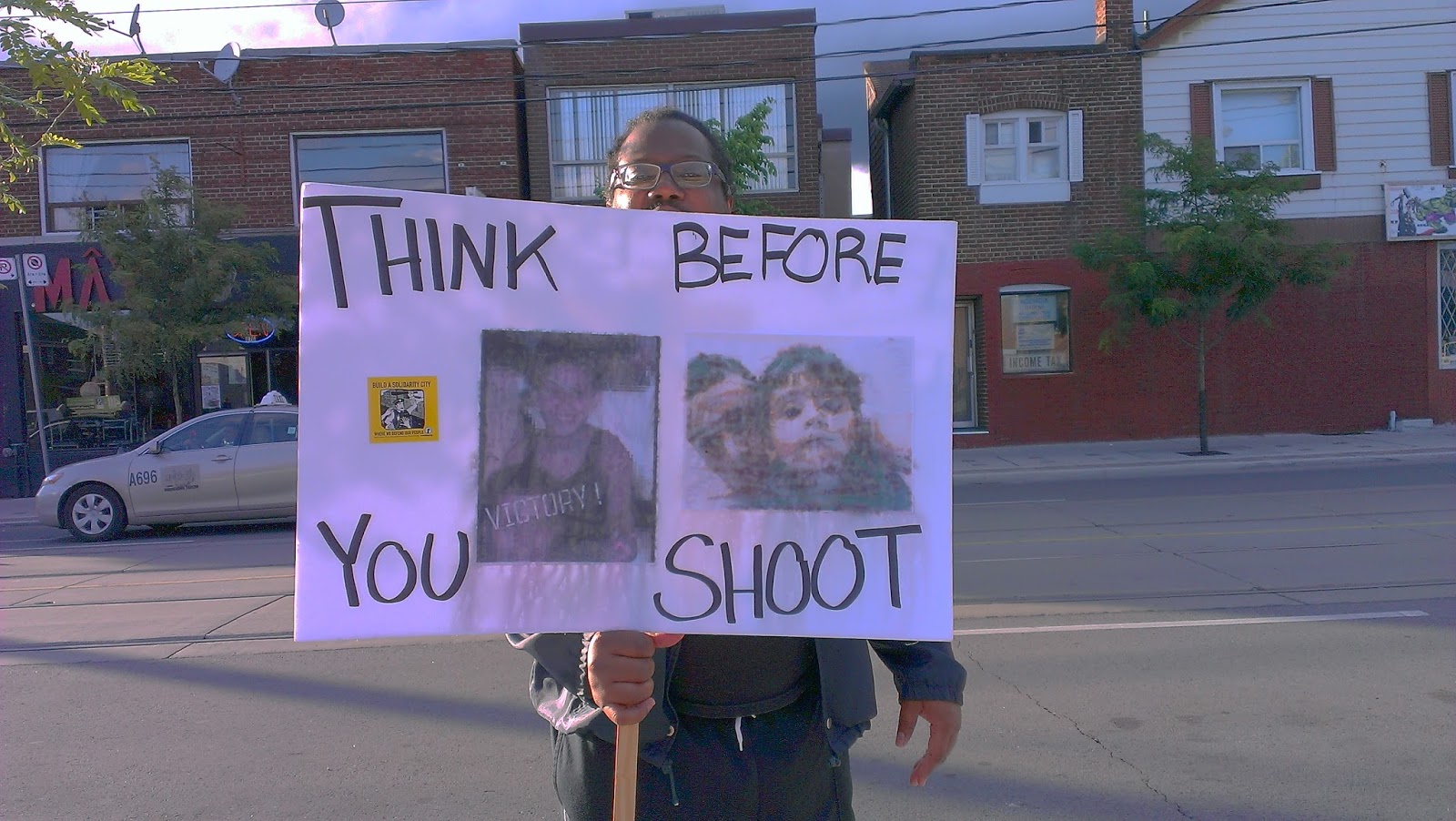
Police officers do need to think before they shoot. Police officers
do need to resort to less lethal options in the use of force continuum and
escalate only as necessary. Police officers need to de-escalate rather than
escalate situations. Those are the implications of a guilty finding in this
case on criminal liability.
It can be expected however that the the funders of Constable Forcillo's legal
team will exhaust all appeal routes to keep him from being convicted and sentence
to a lengthy term of penitentiary. A conviction and sentence to jail time will
inevitably result in the loss of his employment as a police officer.
****
In August 2013, I provided legal commentary on the Sammy Yatim homicide on a Streetcar by Police Constable James Forcillio, on CP24, CTV, CBC Television, CBC Radio, Toronto Star, Global National:
By Selwyn A. Pieters, B.A., LL.B., L.E.C. Lawyer & Notary Public (Ontario, Canada) Attorney-at-Law (Republic of Guyana, Island of Trinidad) Created December 28, 2015
This is a
review of my year of litigation. In 2015 my journey through litigation took my
through several practice areas including education law, human rights,
police law, criminal law, civil litigation, administrative, constitutional and
public law. I won some, I lost some, I resolved some and other cases were
litigated on principles so that whether lost or won, the important issue was
the principle and standing up for justice.
Constitutional and Public law
McAteer et al. v. Attorney General of
Canada
36120 – Constitutional – freedom of expression – Citizenship Oath to Queen Elizabeth II - Leave to Appeal to the Supreme Court of
Canada was denied. See, McAteer, et al. v. Attorney General of Canada, 2015 CanLII 8563 (SCC). See alsoMcAteer v. Canada (Attorney General), 2014 CarswellOnt 10955, 2014 ONCA 578, 121 O.R. (3d) 1, 242 A.C.W.S. (3d) 772, 27 Imm. L.R. (4th) 216, 376 D.L.R. (4th) 258 affirming McAteer, Topey, Dror-Natan v. Canada (Attorney General) 2013 CarswellOnt 13165, 290 C.R.R. (2d) 332, 20 Imm. L.R. (4th) 121, 117 O.R. (3d) 353, 2013 ONSC 5895, E.M. Morgan J. (Ont. S.C.J.). See also Roach et al. v. Canada 2012 CarswellOnt 7799, 2012 ONSC 3521 (ON S.C.). The applicants' position in this case was the Oath to the Queen in the Citizenship Act violates sections 2(a) and (b) Charter of Rights and Freedoms and cannot be saved by section 1. So the Oath Challenge failed. Mr. Dror Bar-Natan took the
oath of citizenship in November 2015 and immediately renounced it upon
receiving his citizenship certificate.
Taylor-Baptiste
v. OPSEU is one of the more significant labour and employment law cases in
2015. It was argued at the Court of Appeal by my friend Ranjan Agarwal.
http://www.casselsbrock.com/…/Top_10_Employment___Labour_La… I argued the case
at the Human Rights Tribunal and my colleague Ranjan Agarwal
argued at the Divisional Court and the Court of Appeal. The Ontario Court of Appeal dismissed the appeal in in the case of Taylor-Baptiste v. Ontario Public Service Employees Union, 2015 ONCA 495 affirming Taylor-Baptiste v. Ontario Public Service Employees Union, 2014 ONSC 2169 (Div. Ct.) and Taylor-Baptiste v. Ontario Public Service Employees Union et al, 2014 ONSC 5218 (costs). Counsel at the Court of Appeal and Divisional Court was Ranjan Agarwal and Amanda McLaughlin of Bennet Jones. At the Human Rights Tribunal I represented Correctional Manager Mariann Taylor-Baptiste in the ground-breaking competing rights case of Taylor-Baptiste v. Ontario Public Service Employees Union, 2012 CarswellOnt 8965, 2012 HRTO 1393, 2012 C.L.L.C. 230-022 reconsideration denied in 2013 CarswellOnt 1033, 2013 HRTO 180, 2013 C.L.L.C. 230-019 at the HRTO. The case is now at the Supreme Court of Canada
on an Application for Leave to Appeal
Human
Rights Law
In
January 2015 Lawyers for the Center for Research-Action on Race Relations, the
National Council of Canadian Muslims, the Canadian Muslim Lawyers Association,
and the South Asian Legal Clinic of Ontario intervened at the Supreme Court of
Canada in a case of alleged racial profiling of a Pakistani Pilot Javed Latif.
Human Rights lawyers including Preet K. Bell, Ranjan K. Agarwal, Selwyn A.
Pieters, Faisal Bhabha, Khalid M. Elgazzar, Faisal Mirza, Aymar Missikala
participated as counsel in Quebec (Commission des droits de la personne et desdroits de la jeunesse) v. Bombardier Inc. (Bombardier Aerospace TrainingCenter), 2015 CarswellQue 6297, 2015 CarswellQue 6298, 255 A.C.W.S. (3d) 79,
2015 SCC 39 (CanLII). The Supreme Court of
Canada rendered its decision in July 2015 dismissing the appeal but upholding
the reasoning of the Ontario Court of Appeal in the Peel Law Association v. Pieters, 2013 CarswellOnt 7881, 2013 ONCA
396, 228 A.C.W.S. (3d) 204, 116 O.R. (3d) 81, 306 O.A.C. 314, 9 C.C.E.L. (4th)
233, [2013] O.J. No. 2695(Ont. C.A.).
Rohan
Roberts application is in the early stages of the Human Rights Tribunal of
Ontario processes. The complaint is alleging racial profiling in the provision
of services by the Toronto Police Services Board, Ryan D’ena and Andrew Keown. This is a walking whilst Black case involving allegations of police harassment, brutality and racial profiling.
The decision on the merits in Lewis v. Toronto Transit Commission was
released. Mr. Lewis, an African-Canadian male, filed an Application under
section 34 of Part IV of the Human Rights Code, R.S.O. 1990, c. H.19, as
amended, alleging discrimination with respect to employment because of race,
colour, place of origin and reprisal. The application was dismissed: Lewis v.Toronto Transit Commission, 2015 CarswellOnt 3092, [2013] O.H.R.T.D. No. 2137, 2015 HRTO 256, CHRR
Doc. 15-0756 (Whist).
Criminal Law
I am involved in drugs, guns and gang case "Project Rx". In that case
over 70 persons were arrested by police officers in a joint forces operation.
The preliminary Inquiry was completed in October 2015 and my client K.C. was
discharged. The issue in that case was possession of firearms and drugs.
Recently I was counsel in two cases where Black men in the Jane and Finch communities in Toronto were harassed then when they question that harassment, they were terrorized, brutalized and to add further injury charged with assault police, resist arrest or obstruct police. The charges were withdrawn in both instances of Michael Duru and Rohan Roberts. When such instances occur, we taken the view that it is a total abuse of their office. And, as I said before, using the courts and the justice system inappropriately to legitimize racial profiling.
On March 16, 2015 the Court of Appeal decision in the long-standing racial profiling case of R. v.Steele, 2010 ONSC 5397 released by Justice Kathryn Feldman, Justice Janet Simmons and Justice Gladys Pardu: C53511 - R. v. Steele, 2015 CarswellOnt 3334, 2015 ONCA 169, [2015] O.J. No. 1253 (Ont. C.A.). Leave to the Supreme Court of Canada denied: R. v. Steele, 2015 CanLII 43092 (SCC). In this case, the Court
of Appeal ruled that a passenger has no rights to privacy in a motor vehicle
during a traffic stop.
Civil Litigation
Bogiatzis v. Davis - Client died
unexpectedly in the middle of preparation for examination for discoveries. This
was quite shocking.
CV-14-512539
- Lam v University of Western Ontario Board of Governors, 2015 ONSC 5281
(CanLII), <http://canlii.ca/t/gkvc2>
and Lam v. The University of Western Ontario Board of Governors et al.,
2015 ONSC 1642 (CanLII), <http://canlii.ca/t/ggplq>. Two attempts by the
Defendants to have the claim struck without leave to amend failed. The matter
now moves to discoveries.
CV-13-491631-00A1 P.P., v.OCSDA v. J. H, T. F. and A. R. litigation involving minors on a field trip arranged and supervised by their school.
Police Law (hybrid Human Rights)
In Afzal v. Regional Municipality of Peel Police Services Board The applicant, a police officer filed an Application under s. 34 of the Human Rights Code, alleging discrimination with respect to employment because of race, colour, place or origin, ethnic origin. He later retained counsel to assist him with the process.
Bartol v. Waterloo Police Services Board - This was an application where a Dispatch officer alleged discrimination against her in employment on the basis of disability contrary to sections 5(1) and 9 of the Human Rights Code. The application also alleged that the employer took retaliatory action against her in contravention of section 8 of the Code.
Education Law
I represented former Toronto
District School Board (TDSB) DirectorChristopher
"Chris" Spencebefore
the University of Toronto Tribunal in respect to plagiarism allegation in
respect to his PhD Thesis.
Dispute Resolution
For 2015
I have settled numerous cases through the mediation process at the Human
Rights Tribunal of Ontario. Other cases involving employment law were settled
in direct negotiations with employers' counsel.
International Law
Walter
Anthony Rodney Commission of Inquiry in Georgetown, Guyana. The Government of
Guyana terminated the evidentiary phase after the elections of May 2015.
Closing arguments were made in July 2015 and the final report may be released
on January 31, 2016.
On
April 20, 2014, when the Guyana Trades Union Congress (GTUC)] announced its
participation in the Walter Rodney Commission of Inquiry, it concluded its
press statement by saying “Guyana and Guyanese deserve closure to this chapter
of our history and an end brought to use of Rodney’s name as a wedge. The GTUC
is prepared once again to play its part to the achievement of this end.” The
Walter Rodney Commission of Inquiry took up a lot of my time and efforts in
2015. The fact remains that the taxpayers spent $400 Million dollars. Further,
the fact remains that a lot of time and effort of a lot of people were put into
that Commission. As well, the fact is there needs to be closure for the Rodney
Family, the Burnham Family, the Smith's Family, people like Ogunseye (who
faithfully attended most of the proceedings including closing arguments), The
PNC persons (who felt their characters were at issue) and many others who need
that aspect of Guyanese history to be done and historically wrapped up. The
sensible thing is to provide the time required to complete that report. The
Commissioners are paid to Inquire and Report. Its taxpayers money, let it be
done. Presenting the report at [January] month's end closes the matter..... We
can then move on [in] 2016 without the Rodney name being used as a wedge, as
Lincoln Lewis describes it.
By Selwyn A. Pieters, B.A., LL.B., L.E.C. Lawyer & Notary Public (Ontario, Canada) Attorney-at-Law (Republic of Guyana, Island of Trinidad) Created December 04, 2015
Charlie Sheen is White, Anglo, Saxon, Protestant. He is part of the establishment, very wealthy and has not been criminally charged despite the allegations similar in nature to Aziga and Johnson. Aziga and Johnson are Black, poor, not part of the establishment and had the resources of the state deployed against them in an unprecedented way.
A question for the Jury in Aziga was "Would your ability to judge the evidence in this case without bias, prejudice or partiality be affected by the fact that the individual charged is a black Canadian citizen who was born in Uganda, has HIV (Human Immunodeficiency Virus), and the alleged victims, including the two deceased women, are white?" R. v. Aziga, 2008 CanLII 29780 (ON SC). This was the first HIV Positive murder case in the world and I was concerned that the right questions was asked of jurors so that the jury was truly impartial.
On April 4th, 2009, Aziga, a Black Ugandan-Canadian male, was convicted, by a Hamilton, Ontario court composed of judge and jury, of two counts of first degree murder, 10 counts of aggravated sexual assault, and 1 count of attempted aggravated sexual assault. All charges arise from fact situations where the applicant, being HIV positive had unprotected sexual intercourse with women without informing them of his HIV status. He was subsequently declared a dangerous offender and is serving an indeterminate sentence in a Federal Prison. See, R. v. Aziga, 2010 ONSC 3683, [2010] OJ No 2763 (QL) and R. v. Aziga, 2011 ONSC 4592 (CanLII).
Michael Johnson, an African-American male, was convicted, by a St. Charles, Missouri court composed of judge and jury, of being HIV positive had unprotected sexual intercourse with men without informing them of his HIV status thereby recklessly exposing them to the HIV virus. He was sentenced to 30 years to life in prison. Johnson was a college athlete (wrestler), who was hooking up with men in his area mostly through social networks created for sexual encounters. He was represented by a public defender.
I am not a proponent of the criminalization of HIV. However, I do take the view that persons aware of their HIV Positive status who consciously fail to disclose that status and have unprotected sex must be held accountable equally. Black people in Canada and the United States of America form the bulk of the persons criminalised under the various laws in respect to HIV disclosure. The laws should not be unevenly applied based on one's race, wealth and/or status in society.
In Ontario, for example, there is a "guideline for Crown Attorneys relating to the prosecution of HIV exposure and transmission cases." However, this document is not publicly available so that the various considerations taken into account by Crown Attorneys are absent from public scrutiny or perview.
Charlie Sheen's case is now the litmus test by which American Justice will be view on the criminal prosecution or the lack thereof of HIV.
***
Selwyn A. Pieters was appointed Co-counsel on January 25, 2008 in R. v. Johnson Aziga, charged with 2 counts of first-degree murder and 13 counts of aggravated sexual assault. My work on the file resuled in three important and significant judicial decisions: See, R. v. Aziga [2008] O.J. No. 2431, 78 W.C.B. (2d) 87; R. v. Aziga; 2008 CarswellOnt 4300 and R. v. Aziga [2008] O.J. No. 3052, 78 W.C.B. (2d) 410. I got off the record on this file on August 06, 2008.
By Selwyn A. Pieters, B.A., LL.B., L.E.C. Lawyer & Notary Public (Ontario, Canada) Attorney-at-Law (Republic of Guyana, Island of Trinidad) Created October 07, 2015
“Racism, and in particular anti-Black racism, is a part of our community’s psyche. A significant segment of our community holds overtly racist views. A much larger segment subconsciously operates on the basis of negative racial stereotypes. Furthermore, our institutions, including the criminal justice system, reflect and perpetuate those negative stereotypes.” R. v. Parks, 1993 CanLII 3383 (1993) 15 OR (3d) 324; 24 CR (4th) 81; 84 CCC (3d) 353; [1993] OJ No 2157 (QL); 21 WCB (2d) 121; 65 OAC 122 (Ont. C.A.), p. 369.
Civil Servant and Ph.D. student Mary McCarthy, realized the painful reality of "Shopping Whilst Black" when she made a late night run shortly after 10:00 p.m, to Kenny Tan Pharmacy Inc., a franchise of Shoppers Drug Mart. In an application filed with the Human Rights Tribunal of Ontario Ms. McCarthy "alleged that a staff person subjected her to racial profiling and discrimination by falsely accusing her of shoplifting, searching her bag, and failing to apologize to her when the search disclosed that she had not shoplifted anything." McCarthy v. Kenny Tan Pharmacy Inc., 2013 HRTO 159, para. 2,
This case also dealt with the reality in a multicultural society of whether a South Asian (Brown) person would discriminate against an African (Black) person?
[88] In its closing submissions, the respondent store argued that Ms. Balachandra could not have racially profiled and discriminated against the applicant because she is also a racialized woman. Ms. Balachandra is South Asian. I disagree. In my view, it is not in dispute among well-informed, reasonable persons that racial stereotypes about persons of Black African descent exist in South Asian communities in both South Asia and Canada. Furthermore, South Asian individuals in Canada who hold such stereotypes and are in positions of power in employment, services or housing undoubtedly have the capacity to discriminate against Black individuals. I am not suggesting that this makes it more likely that Ms. Balachandra discriminated against the applicant, but I also do not accept that, because she is South Asian, it is impossible or less likely that she discriminated against the applicant. I dealt with a similar issue in Armstrong v. Anna's Hair & Spa, 2010 HRTO 1751 at paras. 52-55, and Bageya v.Dyadem lntemational, 2010 HRTO 1589 at para. 136.
The experience, particularly, in the Commonwealth Caribbean of widespread racism, racial tensions and social discord between South Asians and Black, particularly in the Republic of Guyana and the Republic of Trinidad and Tobago, illustrate that racial tensions between South Asians and Black people are a reality and that Black people can be discriminated against by South Asians and the reverse. In Trinidad and Guyana, Black people are stereotyped by South Asians as "thieves" and "robbers", it is no surprise that such stereotypes would be carried to Canada and the same unnecessary stereotyping would pervade.
In the end the Tribunal found that Ms. McCarthy was racially profiled and that her treatment on the night in question violated the Human Rights Code.
A one day hearing took place on September 19, 2013, at which a credibility shootout between the applicant and the respondents in respect to the time the event in question took place. The Respondent in order to undermine the applicant's case claimed the incident occurred after store closing: McCarthy v. Kenny Tan Pharmacy Inc., 2013 HRTO 1663 (CanLII), This is significant as it would have put the applicant in the place of a trespasser rather than a shopper on legitimate business. A receipt was crucial to the resolution of this point of dispute and reinforce the necessity for patrons to obtain receipts for items purchased, regardless how small the amount:
[2] The applicant, who identifies as African Canadian, filed an Application under s. 34 of the Human Rights Code, R.S.O. 1990, c. H.19, as amended (the “Code”), which alleged that the respondent discriminated against her with respect to services and facilities because of her race and colour. Specifically, she alleged that a staff person in a Shoppers Drug Mart store subjected her to racial profiling and discrimination by aggressively and rudely demanding that she open her backpack, looking inside her backpack, and walking away without apologizing.
[3] The respondent filed a Response, which denied the allegation of racial profiling and discrimination. The respondent stated that a store employee approached the applicant and asked to see the contents of her purse because of the applicant’s behaviour (she appeared to be crouching down, taking an item from the store shelf, and putting the item in her purse), not because of her race and colour. The respondent stated that the employee was polite, courteous and respectful to the applicant.
[4] As the parties are aware, at the hearing, there was a dispute between the parties as to when the alleged incident occurred.
[5] The applicant provided the respondent with notice well in advance of the hearing that her position is that the alleged incident occurred between 10:10 and 10:29 p.m. on May 22, 2011 when the store was open, and that she has a receipt to prove it. However, the applicant did not produce the receipt in advance of the hearing or at the hearing.
[6] The respondent, on the other hand, did not dispute the applicant’s position on this matter prior to the hearing and when it cross-examined her at the hearing, it did not bring to her attention that its witnesses would be disputing her position. However, when the respondent called its witnesses, its main witness testified that the alleged incident occurred shortly after midnight on May 23, 2011 when the store was closed.
The Tribunal resumed the hearing with a directive that the Applicant produce the receipt. The applicant produced the receipt that showed the time she attended the store was indeed during store opening.
In its analysis of the legal principles the Tribunal relied upon Peel Law Association v. Pieters, 2013 CarswellOnt 7881, 2013 ONCA 396, 228 A.C.W.S. (3d) 204, 116 O.R. (3d) 81, 306 O.A.C. 314, 9 C.C.E.L. (4th) 233, [2013] O.J. No. 2695(Ont. C.A.):
(a) The prohibited ground or grounds of discrimination need not be the sole or the major factor leading to the discriminatory conduct; it is sufficient if they are a factor;
(b) There is no need to establish an intention or motivation to discriminate; the focus of the enquiry is on the effect of the respondent's actions on the complainant;
(c) The prohibited ground or grounds need not be the cause of the respondent's discriminatory conduct; it is sufficient if they are a factor or operative element;
(d) There need be no direct evidence of discrimination; discrimination will more often be proven by circumstantial evidence and inference; and
(e) Racial stereotyping will usually be the result of subtle, unconscious beliefs, biases and prejudices.
[33] ......The concept of racial profiling was originally developed in the context of proceedings brought against the police for abuse of power, but it has since been extended to other situations:
Racial profiling is any action taken by one or more people in authority with respect to a person or group of persons, for reasons of safety, security or public order, that is based on actual or presumed membership in a group defined by race, colour, ethnic or national origin or religion, without factual grounds or reasonable suspicion, that results in the person or group being exposed to differential treatment or scrutiny.
Racial profiling includes any action by a person in a situation of authority who applies a measure in a disproportionate way to certain segments of the population on the basis, in particular, of their racial, ethnic, national or religious background, whether actual or presumed. [Emphasis added.]
(Commission des droits de la personne et des droits de la jeunesse, Racial Profiling: Context and Definition (2005 (online)), at p. 13; see also Ontario Human Rights Commission, Policy and guidelines on racism and racial discrimination (2005 (online)), at p. 19.)
The Tribunal, having analyzed the evidence provided at the hearing found the applicant was racially profiled and the explanation of the respondent was illogical, incredible and butressed by lies:
[90] To sum up, the following evidence provides a basis to draw the inference that
Ms. Balachandra racially profiled and discriminated against the applicant during her
interactions with her in the respondent store:
• There were significant inconsistencies between the Response to the
Application, Ms. Balachandra's written witness statement, and .her oral testimony with respect to what occurred.
• Ms. Balachandra did not see the applicant put a store product in her
bag, but strongly believed that she had done so, which was completely illogical. She was unable to offer a reasonable explanation for this
strong belief.
• Ms. Balachandra was rude to the applicant from the outset of her
interaction with her by not identifying or introducing herself to the
applicant, speaking to her in an elevated voice, and demanding that she open her backpack.
• Ms. Balachandra's action in directly confronting the applicant and
searching her backpack inside the store was contrary to the respondent store and Shoppers Drug Mart's policy on dealing with suspected
shoplifting.
• Despite having been employed by the respondent store for almost five years, and having had to deal with shoplifting incidents during most of
her shifts, Ms. Balachandra was unable to provide a single example
where she directly confronted and searched the bag of a non-Black
individual inside the store.
• After discovering that there was no store product in the applicant's
backpack, Ms. Balachandra continued to be rude tothe applicant by not apologizing to her. She was unable to offer a reasonable explanation
why she did not apologize, and her behaviour was contrary to how she normally behaves, which is to be polite.
• Ms. Balachandra lied when she testified that the incident occurred
shortly after midnight when the respondent store was closed. She
concocted this allegation at the last minute in an attempt to protect
herself and bolster the respondent store's case.
• Ms. Balachandra tried to evade the applicant's allegation of racial·
profiling and discrimination by falsely testifying that she "did not notice
that the applicant was Black when she first saw and spoke to her in the respondent store.
• Ms. Balachandra was unable to offer a credible, non-discriminatory
explanation for how she treated the applicant.
See Peel Law Association, above, at para. 128, where the Ontario Court of Appeal found that similar evidence was an ample basis to support an inference of racial profiling and discrimination.
[91] For the above reasons, I am satisfied that the applicant has established, on a balance of probabilities, that her race and colour were a factor in how Ms. Balachandra treated her in the respondent store. In my view, although the applicant's race and colour were not the sole factor, they were a factor, and moreover, a significant factor, in the adverse treatment. Furthermore, in view of the fact that Ms. Balachandra is an employee of the respondent store, the respondent store is liable for her conduct. See s. 46.3(1) of the Code.
In Peel Law Association v. Pieters, the Court of Appeal place particular significance to a false explanation as a pretext to discriminate holding that:
[72] And so it is in discrimination cases. The question whether a prohibited ground is a factor in the adverse treatment is a difficult one for the applicant. Respondents are uniquely positioned to know why they refused an application for a job or asked a person for identification. In race cases especially, the outcome depends on the respondents’ state of mind, which cannot be directly observed and must almost always be inferred from circumstantial evidence. The respondents’ evidence is often essential to accurately determining what happened and what the reasons for a decision or action were.
[73] In discrimination cases as in medical malpractice cases, the law, while maintaining the burden of proof on the applicant, provides respondents with good reason to call evidence. Relatively “little affirmative evidence” is required before the inference of discrimination is permitted. And the standard of proof requires only that the inference be more probable than not. Once there is evidence to support a prima facie case, the respondent faces the tactical choice: explain or risk losing.
[74] If the respondent does call evidence providing an explanation, the burden of proof remains on the applicant to establish that the respondent’s evidence is false or a pretext.
…
[77] The shifting of the evidential burden does not put the respondents in the position of having to prove a negative. Rather, it puts them in the position of having to call affirmative evidence on matters they know much better than anyone else – namely, why they made a particular decision or took a particular action. [Emphasis added.]
McCarthy by singularly producing her receipt demolished the case of the respondent that was built on a pack of lies.
In racial profiling cases the first step, which is crucial is establishing liability, if a case is successful at that point then the next step is to argue for a variety of other legally appropriate remedies, financial and non-monetary.
In terms if remedies, Ms. McCarthy was awarded $8000.00. The Tribunal's reasoning on how it arrived at that relatively modest quantum is instructive:
[99] None of the above decisions are closely analogous to the case at hand, but, in
my view, the ones that are most analogous and relevant with respect to the appropriate
quantum to be awarded to the applicant for injury to dignity, feelings and self-respect
are Pieters, Simpson, and Direk. In Pieters, this Tribunal found that the librarian/administrator of a lawyers' lounge racially profiled and discriminated against
two Black lawyers when she demanded that they produce identification to prove that
they were lawyers, and awarded each applicant $2,000 for injury to dignity, feelings and
self-respect. In Simpson, a Human Rights Tribunal of Alberta found that the respondent
refused the complainant entry to its nightclub because he is Asian, and awarded him
$15,000 for general damages. In Direk, this Tribunal found that the respondent coffee
shop's owner made discriminatory comments about Turkish people, and called the
police on the applicant because he is Turkish. The Tribunal awarded the applicant
$15,000 for injury to dignity, feelings and self-respect.
[100] In my view, the quantum that should be awarded to the applicant for injury to
dignity, feelings and self-respect in the case at hand lies somewhere between the
quantum awarded in Pieters, and the quantum awarded in Simpson and Direk. The
quantum should be higher than in Pieters because it is a far more serious violation of
the Code to be falsely accused of being a thief and subjected to a bag search in a store
because of race and colour than to be asked for identification in a lawyers' lounge
because of race and colour, but not as high as in Simpson, where the applicant was
refused a service because of his race, and in Direk, where the police were called on the
applicant because of his place of origin and ethnic origin.
[101] I find, overall, after considering the extremely serious violation of the Code, the
applicant's individual circumstances, and the relevant case law, that the $8,000 that the
applicant requested is an appropriate award of compensation for injury to dignity,
feelings and self-respect.
The remedies particularly the financial remedy awarded by the Tribunal is woefully inadequate and a licence to discriminate. Its great that Ms. McCarthy has a positive decision but with a remedial order of $8000.00, which is nuisance value money, as respondents terms such figures, I have a pessimestic view of that decision of this nature can result in the changing hearts and minds particularly when controlling for the costs mentally, physically and financially of applicants litigating such cases.
The Peel Law Association v. Pieters case was highly contested and litigated as well. Peel Law Association incurred over $200,00.00 costs for their legal representation and paying a Damage Award and Cost Award to the successful applicants. The applicants also incurred a substantial cost burden in funding the litigation all the way to the Court of Appeal: See, Noble v. Peel Law Association, 2009 CarswellOnt 3496, 2009 HRTO 805 (CanLII) (Vice Chair B. Eyolfson); Noble v. Peel Law Association, 2009 CarswellOnt 1758; 2009 HRTO 357 (CanLII) (Vice Chair K. Joaquim); Pieters v. Peel Law Association, 2010 CarswellOnt 9354, [2010] O.H.R.T.D. No. 2398, 2010 HRTO 2411 (CanLII) (Vice Chair E. Whist); PeelLaw Association v. Pieters, 2012 CarswellOnt 2026, [2012] O.J. No. 684, (2012), 288 O.A.C. 185, 2012 ONSC 1048, 213 A.C.W.S. (3d) 729 (Div. Ct.) (Chapnik, Hockin and Hoy JJ); Peel Law Association v. Royal Insurance, 2013 ONSC 2312, [2013] 116 O.R. (3d) 312 (Donohue, J.); Peel Law Assn. v. Pieters, 2012 CarswellOnt 8616 (Gillese, Epstein, Feldman JJ.A.); Peel Law Association v. Pieters, 2013 ONCA 396, [2013] 116 O.R. (3d) 81, 2013 CarswellOnt 7881, 2013 O.J. No. 2695, 228 A.C.W.S. (3d) 204 (Cronk, Juriansz and Pepall JJ.A.).
The broader point is these cases have little consequences on respondents behavior due to the imbalance of resources to litigate these cases. A significant amount of financial, legal and human resources are available to Corporate Respondents in Human Rights Applications. It is rare for Aplicants to have access to the financial resources of respondents to litigate these cases. Thus, with the absence of award of legal costs to the successful Applicant and the very modest financial awards to successful Applicants, one sense of dignity is never really restored and in fact it is undermined such that a Respondent controlling for the rare chance that an Applicant can successful win a racial profiling case at the Human Rights Tribunal has a license to discriminate and harass Black people whether they are walking, shopping, driving, riding and working under whatever guise suits their fancy.
The paucity of positive human rights decisions, particularly in respect to racial profiling, has led to a pessimistic view amongst some human rights litgants and applicant counsel on human rights tribunals and there ability to effectively and meaningfully adjudicate human rights disputes and provide meaningful remedies for Applicants/Complainants.
By Selwyn A. Pieters, B.A., LL.B., L.E.C. Lawyer & Notary Public (Ontario, Canada) Attorney-at-Law (Republic of Guyana, Island of Trinidad) Created August 31, 2015
On June 16, 2015, Ontario's Minister of Community and Correctional Services announced that the province intends to develop a set of rules to govern police street checks. In furtherance of this objective, it is holding consultations with various stakeholders.
As a lawyer who represented persons facing the brunt of this practise in civil courts, before the Human Rights Tribunal and in Criminal litigation, I set out a chart of my jurisprudential journey so that these issues are not considered in the abstract but rather having regard to what obtains in our courts and tribunals in respect to this process of racial oppression.
By Selwyn A. Pieters, B.A., LL.B., L.E.C. Lawyer & Notary Public (Ontario, Canada) Attorney-at-Law (Republic of Guyana, Island of Trinidad) Created August 05, 2015 Updated February 03, 2016
The Report of the International Commission of Inquiry into the death of Dr. Walter Rodney aka the Rodney Commission of Inquiry or Rodney COI is scheduled to be delivered to H.E. David Arthur Granger, President of the Co-operative Republic of Guyana on February 08, 2016. Initially the President provided the Commission with a deadline of November 30, 2015 in which to produce its findings and recommendations. However, extensions were provided to enable the Commission to complete its work.
On June 13, 2013, the thirty-third anniversary of the June 13, 1980 explosion that killed Dr. Walter Rodney, the Government of the Republic of Guyana announced that it has approved the establishment of an International Commission of Inquiry into the death of Dr. Walter Rodney.
In February 2014, the then President of the Republic of Guyana, His Excellency, Donald Ramotar, appointed The Walter Rodney Commission of Inquiry. Three
Commissioners were sworn in to probe the matter: Sir. Richard L. Cheltenham, K.A.,
Q.C., Ph.D – Chairman (Barbados); Mrs. Jacqueline Samuels-Brown, Q.C. (Jamaica)
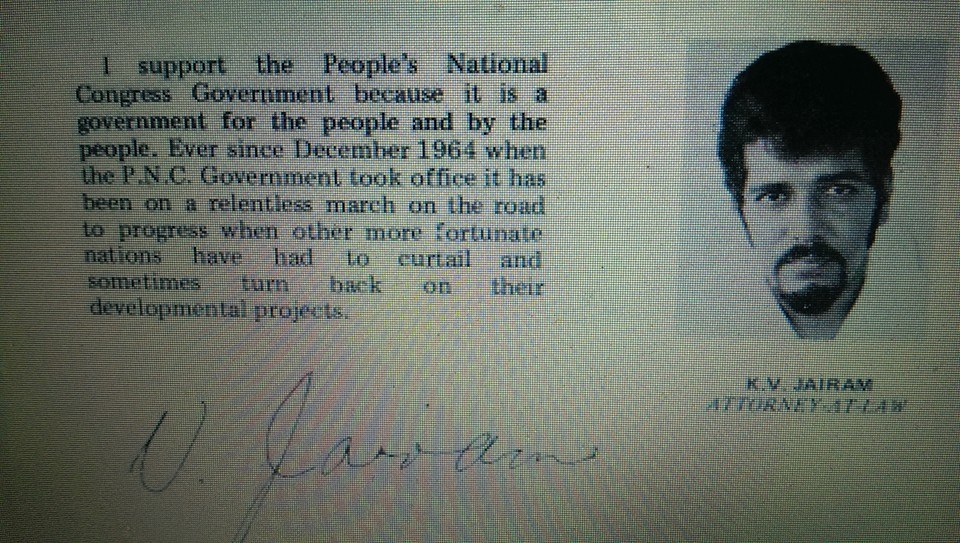
and Mr. Seenath Jairam, S.C. (Trinidad).
(i) To examine the facts and circumstances immediately prior, at the time of, and subsequent to, the death of Dr. Walter Rodney in order to determine, as far as possible, who or what was responsible for the explosion resulting in the death of Dr. Walter Rodney;
(ii) To inquire into the cause of the explosion in which Dr. Walter Rodney died, whether it was an act of terrorism, and if so, who were the perpetrators;
(iii) To specifically examine the role, if any, which the late Gregory Smith, Sergeant of the Guyana Defence Force, played in the death of Dr. Walter Rodney and if so, to inquire into who may have counselled, procured, aided and or abetted him to do so, including facilitating his departure from Guyana after Dr. Walter Rodney’s death;
(iv) To examine and report on the actions and activities of the State, such as, the Guyana Police Force, the Guyana Defence Force, the Guyana National Service, the Guyana People’s Militia and those who were in command and superintendence of these agencies, to determine whether they were tasked with the surveillance of and the carrying out of actions, and whether they did execute those tasks and carried out those actions against the Political Opposition, for the period 1st January, 1978 to 31st December, 1980;
(v) To examine, review and report on earlier investigations and enquiries done on and into the death of Dr. Walter Rodney.
The first session of public hearing commenced on April 28, 2014 and concluded on
May 02, 2014.
The last session of public hearing in which evidence was elicited from witnesses commenced at 0930 hours on March 23, 2015 and concluded on March 27, 2015. The main witness Donald Rodney, first appeared on January 30, 2015 and continued his evidence from March 23, 2015. His evidence was followed by another significant witness Anne Wagner, the sister of William Gregory Smith.
The Commission has not seen fit to create a repository of important evidence, submissions, news reports and other documents relative to the Commission. This blog therefore is the most comprehensive collective of material in relation to the work of the Rodney Commission of Inquiry.
Final Sitting of the Walter Rodney Commission of Inquiry
A final sitting of the Walter Rodney Commission of Inquiry took place from the 27th July, 2015 to 31st July, 2015.
Monday 27th and Tuesday 28th July, 2015 was allocated to the attorneys for interested parties to provide oral submissions.
Walter Rodney Commission of Inquiry - Written Arguments of Counsel for the People's National Congress
Jamaica Hansard. 1968-1969. Proceedings of the House of Representatives of Jamaica October 17, 1968 (Rodney Affair 01, 02, 03) - "National Security of Jamaica"
Selwyn A. Pieters, B.A. (Toronto), LL.B. (Osgoode), L.E.C. (U.W.I). Lawyer & Notary Public (Ontario). Attorney-at-Law (Republic of Guyana and Republic of Trinidad and Tobago).