Saturday, April 23, 2016

SELWYN A. PIETERS RESPONSE TO JUSTICE JAMES PATTERSON CHAIRMAN OF CAMP STREET PRISON COI

on April 22, 2016 on or about 1:50 p.m. whist Chief Prison Officer Patrick Crawford, of the Guyana Prison Service, was in the witness box I was handed a document on the Commission’s letterhead titled “PRESS RELEASE”. That release had already been circulated to the media without my knowledge. 

When the Chairman berated me publicly on April 05, 2016 for a matter that really was put to bed the following day by the very News Source, it distracted me from my focus on a witness. See, Commission Chairman and Prison Attorney clash over video evidence, April 5, 2016 (date accessed: April 22, 2016). Today, another witness Mr. R. was to provide evidence and I could not continue as I felt sick to my stomach reading the Retired Justice James Patterson's press release that he put out to the public and provided to me in the presence of my client’s representatives and a witness in the midst of the proceedings in open court. These are two actions on the part of that retired justice that created a hostile and poisoned atmosphere in his courtroom. This action on April 22, 2016 is akin to serving a person with a writ whilst a witness is in a witness box in a courtroom: See, Curling v. Victoria Tea Co Ltd., 38 C.H.R.R. 216, 2000 CanLII 20870 (ON HRT), 2000 CanLII 20870 (ON H.R.T.).

Judges speak through their Judgments not  through a"Press Release" that is provided to the media and then served on counsel in that very Judge Courtroom in the presence of a witness, the media, the public, the other side and all present.  

Putting out a press release without using the formal processes that the law provides to a Justice to deal with any perceived issues in his/her courtroom brings the administration of justice into disrepute. It means an attack on the integrity of "Officers of the Court", the very Court that the Justice has inherent jurisdiction to control its processes.

James Patterson wrote:

These proceedings unfortunately have given rise for what we know in the vernacular as “grandstanding”.  Liberties were taken. Mr. Selwyn Peters, Counsel for the Joint services and Fire Service, was ferried away by his enthusiasm and made statements which, by any objective view, constitute a breach in civility and an affront to the Commission.  In very short order Mr.  Peters approached the Chairman and was profuse in his apologies for his delict. The apology was unconditional and was well received.

Mr. Christopher Ram, on the other hand, who appeared for the Bar Association as an interested party obtained “good standing” from the Commission to conduct his brief.  Mr. Christopher Ram was equally fierce on behalf of his clients, an amorphous lot though they be. The Commission has been unusually charitable to Mr. Christopher Ram whose forte clearly is not the art of the advocate.  His appearance has been pro bono, for the public good, and such appearances are clearly to be commended.  The Commission applauds Mr. Christopher Ram for his initiatives.

In his haste to issue a press release attacking counsel for all sides appearing before him he could not even get the spelling of my name right. It is Pieters not Peters. I also have several comments to make in response to retired Justice James Patterson’s press release about me. 

Throughout the two weeks that the inmates of the Georgetown Prison were testifying before the Commission of Inquiry, inflammatory comments were peddled in the press that attacked the reputation and integrity of senior members of the Joint Services who I was retained to represent. We could not allow that to stand unchallenged.

As was reported in the media, on Day 11 of the Commission’s sittings inmate Collis Collison took the witness stand. Allegations were made about the conduct of officers that were untrue. I clarified the truth in respect to the conduct of the officers with reference to a video that existed that presented objective evidence of what took place at the material date, time and place. I went up to the Commission’s Secretariat that day with my laptop and showed the Chairperson Justice Patterson the video from my computer. The Commission Counsel inserted a DVD into her device and showed a short clip that did not correspond to the very label on my disk. I followed up with the Guyana Prison Service representatives and was told that the entirety of all videos including surveillance videos were turned over to the Commission of Inquiry and soon after a request was made to the Guyana Prison Service.

On day 12 of the Commission Sittings (when Carl Brown was in the witness box) the Chairman entered the hearing, and similarly to April 22, 2016, where I was not given advance notice of a press release being sent out by the Commission, presented an article to me from News Source, that spoke to a video that existed that was shown to the media and asked me to comment. I commented on my interaction with the press the day prior. The Chairman was upset and the entire interaction between him and I was captured nationally and internationally because of the matter in which he chose to address it. I apologized to him because it is in my nature to apologize to any person that I may have unintentionally offended. I also have a lot of respect for the panel collectively.

I disagree with Justice Patterson, for reasons that will be seen below that there were any breaches of civility on my part. I could have ignored his comments and conduct or respond to it and I responded appropriately and professionally.

Justice Patterson never checked with the source of the article. News Source had obtained and seen the video of the encounter with Collison and the Officers well before I was retained by the Prison Service or even in the Cooperative Republic of Guyana:

News Source saw a copy of the video of the prison unrest and reported on it long before Mr. Pieters became involved in the Commission of Inquiry and long before he arrived in Guyana.

The Attorney never showed any video related to the Prison Unrest to News Source.

News Source was able to view a video recording of the prison unrest that appeared to have been captured by a prison officer.

See, Commission Chairman and Prison Attorney clash over video evidence, April 5, 2016 <http://newssourcegy.com/news/commission-chairman-and-prison-attorney-clash-over-video-evidence/>  (date accessed: April 22, 2016).

On the day that the Chairman was upset about the video he allowed me to be verbally abused by Carl Brown. I also challenged inflammatory statements Carl Brown made about Commissioner Erskine. The Chairperson, instead of warning Mr. Brown, responded he cannot control what comes out of a witness mouth. 

Mr. Dexter Todd later that day launched an attack on me. Go to 7:20 of this video and onward: <https://www.youtube.com/watch?v=jMkub_ZqMV0>.  All of that was in front of the National and International media and I have the video footage of it all. I was NOT allowed to respond to Todd’s abusive missive “I will not hear you” was Justice Patterson’s words. 

The Secretariat and the Commission Chairperson himself after I was retained as counsel continued to by-pass counsel, instead communicating directly with the Prison Director and the OC of the Georgetown Prison. I was advised by the OC Mr. Pilgrim that the COI had all of the relevant video footage. I believed him and still do have no reason to doubt the veracity of what he told me. I learnt that the videos was sent to the Commission in electronic downloadable format. It appears that the entirety of a video was not downloaded. When I was told of it by Commission Secretary, I directed the Prison Officer assigned to assist me to immediately turn the DVD over to the Secretariat. During the exchange with the Chairperson when I explained to him my understanding on the video issue he said in a very condescending tone “I chose to believe you.” I made it very clear as a lawyer and an officer of the Court if he did not believe me I was prepared to resign immediately. My integrity and my word is what I have as a lawyer and I will not allow it to be impugned when there was no evidentiary basis to support an assertion. I did not know the Commission did not download the entirety of the prison video and that was my word. My word is my bond.

I mentioned to the Chairperson that this issue of communicating directly with the client outside of the knowledge of the lawyer poses difficulties and that I should be copied on all communications to my client. That practice of communicating with the clients without copying me continued. It presented difficulties to me and the clients. An example being an ill officer being directed to report to the Commission the next business day whilst on sick leave. Another is the Director of Prisons being directed to provide evidence to the Commission that very next business day without speaking to his lawyer or providing a will-say statement.

I addressed that issue with the Commission on April 08, 2016:

On another note, a copy of the letter from the Commission Chairperson to the Director of Prisons was forwarded to my attention. Unfortunately, that schedule that the Commission sent to the Director after its counsel left the jurisdiction is simply not just. No discussion was held with the Prison Counsel in the case management conference in respect to the Guyana Prison Services witnesses. Those witnesses will be made available from April 18, 2016. 

It is the usual protocol that represented clients are communicated with through their counsel, while I cannot dictate to a Tribunal how it wishes to conduct its affairs that is how I know it since I have been practicing law. I am uncomfortable that I usually learn of the Tribunal’s correspondence to my clients only after the clients have forwarded them to me. That is not and cannot be acceptable in any quasi-judicial or judicial forum. I will be much obliged that I be copied on any correspondence to my clients so that I can properly be accountable to the Tribunal as an Attorney-at-law.

The Chairperson wrote:

The Chairman of the Commission, caught in the cross fire of the fierce contending parties, has on a regular basis incurred the wrath of both counsel that is to say, Mr. Christopher Ram and Mr. Selwyn Pieters, as each pressed their client’ case with understandable vigour.”

In respect to me, my significant concern that appears to be Mr. Ram’s concern is the chairman’s  inflexible approach in arbitrarily imposing a 20 minute time-limit for cross-examination of witnesses when some witnesses would, obviously require more time than others. In the following days after the 20 minutes time limit was imposed the Commission either sat half-day or not at all.

The chairman Justice Patterson issued a press release that does the profession in Guyana harm. The instant where and when Mr. Ram walked out of the Commission of Inquiry where he believed that his work was hampered is not new. A lawyer similarly walked out of the Linden Commission of Inquiry in 2012. In terms of the 2012 walkout I was reminded by another colleague present that "Mr. Hughes withdrawal was after a bizarre and excessive reprimand from the Chairman. On his return his cross examination by Minister Rohee was severely and frequently unfairly interrupted and curtailed by Mr. Knight."

Lawyers walked out of the Rodney Commission of Inquiry when they were subjected to bias and excessive interjections by the Chairperson and the panel members. In the Linden COI and the Rodney COI, these issues were not dealt with by Press Releases but within the jurisdiction of the COI and resolved so that the lawyers could return and protect their clients interest. In other words, the Commissions recognized the lawyers had a job to do and struck a balance that worked for all concerned.

Prior to the issuance of the "press release" from Justice Patterson I reached out quietly to Christopher Ram and the Chairperson, through his Secretary, to see whether the gap could be bridged. Mr. Ram's response was positive. I then wrote to the Commission through its Secretary:

From: Selwyn Pieters
Sent: Wednesday, April 20, 2016 7:36 PM
To: Teshanna Cox
Cc: Christopher Ram ; Glen Hannoman; Law Office of DEXTER TODD ; Selwyn pieters
Subject: Guyana Bar Association President Withdrawal

Good evening Ms. Cox,

We have been down the road in other Commissions where counsel left a Commission of Inquiry in a huff in the heat of battle over objections sustained or other rulings by the Commission. That occurred today in another COI. Obviously the Guyana Bar Association is an important stakeholder. Some middle ground may be able to be reached in a pre-hearing conference in Chambers. I have spoken to Mr. Ram and he is willing and able to attend in Chambers to meet with the Commissioners. I am reaching out to see whether or not the Commissioners can hold a pre-hearing conference tomorrow with all counsel.

I have enclosed the clips from the Linden Commission of Inquiry:

Nigel Hughes withdraws from Linden COI after refusing to retract inappropriate remark
https://www.youtube.com/watch?v=_57Io17aREo

Attorney Nigel Hughes returns to Linden Commission of Inquiry
https://www.youtube.com/watch?v=MvXitIc4PGA

I am a member of the Guyana Bar and member of the Guyana Bar Association so I do respect the work of the Bar Association and it contribution to the COI vis-a-vis its members.

Please convey my thoughts to the Commission.

The very evening of April 20, 2016, Commission Secretary responded to me as follows:

4/20/16, 9:04 PM - Ms Tashana Cox: Hi
4/20/16, 9:04 PM - Ms Tashana Cox: I just spoke to Chairman
4/20/16, 9:16 PM - Selwyn Pieters: And what is his thinking?
4/20/16, 9:43 PM - Ms Tashana Cox: He said no
4/20/16, 9:43 PM - Ms Tashana Cox: He thinks that Ram's statement was made to publicly embarrass the court
4/20/16, 9:43 PM - Ms Tashana Cox: Well...
4/20/16, 9:43 PM - Ms Tashana Cox: And if he wants to re enter, he needs to be a man enough and make a public announcement
4/20/16, 9:44 PM - Ms Tashana Cox: Commissioners were pretty peeved this afternoon about the entire incident
4/20/16, 9:44 PM - Ms Tashana Cox: Chairman especially was upset at Ram's "short fuse"
4/20/16, 9:45 PM - Selwyn Pieters: I understand that why I sent Hughes YouTube video from Linden COI so that he knows to apologize to the panel.
4/20/16, 9:52 PM - Ms Tashana Cox: Very well. Let's see how that goes.
I heard nothing further from the Commission until the issuance of the Press Release.

Professionalism goes both ways. In all of the instances cited above, I was not treated professionally or with civility. 

Little to no legal recourse exist to deal with a retired Justice who has crossed the line with lawyers and his colleagues. 

I have been through worst abuse in my legal career and I will never ever “yield to the conduct and manners of the gutter.” Fortunately, for the period in question, all of the video footage are on my youtube channel and all and sundry are welcome to review each and every minute. The only time I showed some frustration was on Day 12 when I was not only subject to what was described above but also had my cross-examination of an important witness curtailed to 20 minutes and in language that was not particularly polite. Again, and thankfully, the entirety of these footage are on my youtube channel.


END

Wednesday, March 16, 2016

Camp Street Prison Georgetown Commission of Inquiry

Toronto-based Human and Civil Rights Lawyer Selwyn Pieters has been granted standing to provide legal representation to the Guyana Prison Service, Guyana Police Force and Guyana Fire Service in the Commission of Inquiry constituted for the purpose: “to enquire into all the circumstances surrounding the death of  seventeen (17) Prisoners namely from the Camp Street Prison, Georgetown on the morning of Thursday 3rd of March,2016 to report the findings and conclusions to the Minister of Public Security and to make recommendations on any action that should be taken to avoid any recurrence”

“The government has the prerogative to choose who its legal counsel are and who it repose confidence in to represent the interest of the state and state bodies. Certainly the loss of 17 lives are quite tragic. Certainly we want to get to the truth of what occurred. Certainly we want tangible and meaningful recommendations to improve the prison system and to make it much better to ensure there is no further loss of lives so that prisoners are while in state custody can be treated in an humane manner, can be safe , while the public is protected and secured” says Selwyn Pieters

Video Recording of the Testimony of Witnesses


 The Terms of Reference

(1)             The Inquiry will investigate, examine and report on:

·         Examine the causes, circumstances and conditions that led to the disturbances on the morning of the 3rd of March, 2016 that resulted in the death of 17 Prisoners on the morning of the 3rdof March, 2016 and any other subsequent disturbances at the Camp Street Prisons, Georgetown.

·         Inquire into the nature of all injuries sustained by the Prisoners during the disturbances on the morning of the 3rdof March, 2016 and any other subsequent disturbances.

·         Determine whether the conduct of the staff of the Guyana Prisons Service who were on duty on the morning of the 3rd of March, 2016 and thereafter was in compliance with the Standard Operating Procedures of the Guyana Prisons Service.

Determine whether the deaths of the 20 prisoners was as a result of the negligence, abandonment  of duty ,disregard of instructions, inaction of the Prison Officers who were on duty on the night of the 2nd of March,2016 and the morning of the 3rd of March,2016.

(2)             Recommendations

The Commission shall determine comprehensive and plausible recommendations to ensure the safety of the prisons.

(i)                                      Examine and make findings and recommendations to improve the physical infrastructure of the prison;

(ii)                         The existing security arrangements in respect of the custody, management and control of prisoners.

(iii)                       The appropriate treatment of prisoners in compliance with legal and other requirements.

(iv)                       To prevent a recurrence of any such disturbances.

(3)              Rules of Procedure

(i)                            The Inquiry must consider the views of stakeholders including:
·        Staff of the Prisons and their Unions;

·        Members  of the Judiciary;

·        Prisoners accommodated within the Camp Street Prisons

·        Staff of the Ministry  of Health and the Ministry of Social Protection and  Human Services;

·        Any other stakeholders the Inquiry deems appropriate.

(ii)                         This commission shall render its report, findings and recommendations to the Minister of Public Security no later than the 31st of March, 2016.
(iii)                       This Inquiry shall be conducted continually at the (Venue) and in such other places as the Honourable Chairman may determine.
(iv)                       The Inquiry shall be held in public, with reservation nevertheless to the Commissioners to exclude any persons/persons if they deem fit for the due conduct of the Inquiry, the preservation of Order or for any other reason.
(v)                         The Commission shall commence work on the …..day of March,2016 and the said Chairman shall take appropriate steps to ensure that the Commission complete its work and submit its report within the aforesaid time.
(vi)                       The Chairman and one other Commissioner shall constitute a quorum.
(vii)                    Subject to the above, this Commission shall establish and regulate its own procedures for the conduct of the Inquiry and shall be governed by the aforesaid provisions of the Constitution of Guyana, the Commissions of Inquiry Act, Chapter 19:03, the High Court Act, Chapter 3:01and any other Laws enabling.

Monday, March 07, 2016

TTC "The Bed Bug Way"


By Selwyn A. Pieters, B.A., LL.B., L.E.C.
Lawyer & Notary Public (Ontario, Canada)
Attorney-at-Law (Republic of Guyana, Island of Trinidad)
March 07, 2016

As a frequent user of the Toronto Transit Commission (TTC) in Toronto, I have had my own experience with various pest and insects crawling on the seats, the windows and various parts of the interior of the bus, streetcars and trains. So it was not news to me when CTV Toronto lead story tomight was Documents show 12 confirmed cases of bedbugs on TTC vehicles since 2014

The Transit system is for all residents of the city, whether from the very right, to middle class to the poor to the homeless to those who live in shelters. It is therefore not a stretch that bed-bugs are highly adaptable and can survive and thrive in almost any environment where there exist human blood to feed off of. Bed bugs are a public health hazard and a severe nuisance.

The TTC response to the issue in most cases was to publicly deny the existence to prevent a publicity disaster. However, by not publicly declaring this hazard it probably will lose customers, more out of fear of involuntarily taking these pest home than the inadequate response of the TTC.


Saturday, February 27, 2016

Police Interrogations and The Psychology of False Confessions

Selwyn Pieters and Rick Frank, Police Interrogations and The Psychology of False Confessions
Online <http://www.selwynpieters.com/documents/Police_Interrogations_and_The_Psychology_of_False_Confessions.pdf> Delivered on February 22, 2016 at 10th Anniversary Conference: "La psychologie des erreurs judiciaires/The Psychology of Wrongful Convictions, McGill Faculty of Law, Montreal, Quebec

Tuesday, January 26, 2016

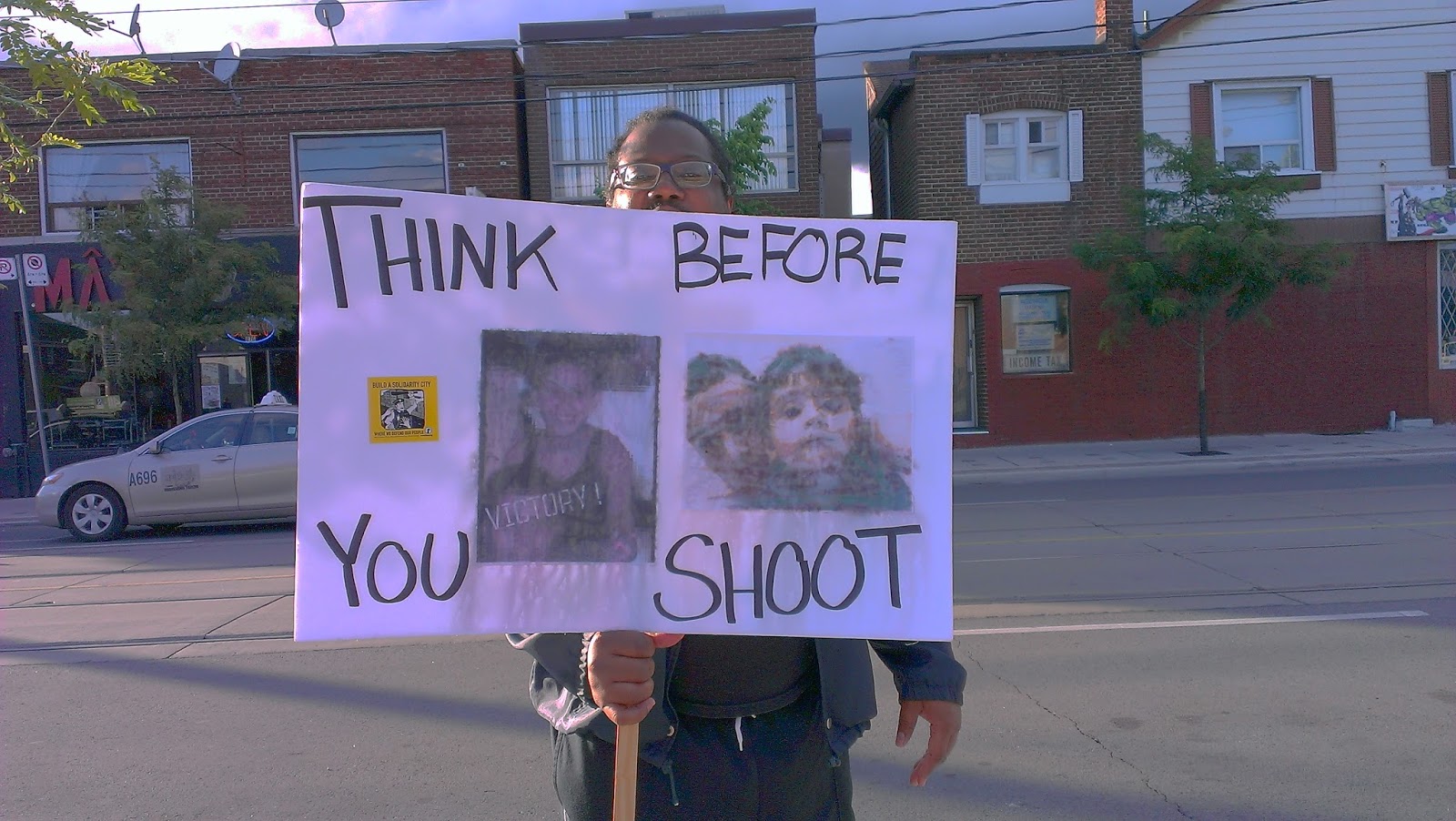
R v. Constable James Forcillo - Is the judgement a licence to kill?


By Selwyn A. Pieters, B.A., LL.B., L.E.C.
Lawyer & Notary Public (Ontario, Canada)
Attorney-at-Law (Republic of Guyana, Island of Trinidad)
 
Pieters at the site
where Yatim was gunned down
On July 27, 2013, Constable James Forcillo a member of the Toronto Police Service, together with several police officers converged on a streetcar that was stopped at Dundas Street and Bellwoods Avenue, in response to an emergency alarm from the Toronto Transit Operator who was driving the 505 streetcar. Yatim was alone in the streetcar having allegedly threatened passengers who were sitting in close proximity to him.

Forcillo issued expletive laden commands to Yatim. Yatim responded with his own expletive laden words. Forcillo fired three shots at Yatim as he allegedly made a step forward on the streetcar in disobedience to Forcello's command.  That pathology report stated that the shots fired in this volley killed Yatim. That is not the end of the story. Whilst Yatim fell on the floor of the streetcar and was dying, Constable Forcillo fired six more shots at Yatim. The six shots were not lethal.

Constable Forcillo was arraigned before the Jury and tried for the following offences:
1) Second degree murder;
2) Manslaughter;
3)Attempted murder
4) Aggravated assault.

The first two charges relates to the first volley of three rounds fired at Sammy Yatim on the streetcar whilst he was close to the streetcar door with a knife in his hands. The third and fourth charges relate to the six shots fired after a pause and during the time that Yatim lay helpless on the floor of the streetcar dying.

On January 25, 2015, Constable James Forcillo was found guilty by a eleven (11) member mixed jury in a Superior Court Trial presided over by  The Honourable Edward F. Then.

The defence in this case raised the justification for the use of force under section 25 of the Criminal Code and self-defence  under section 34 of the Criminal Code. From all appearance the jury accepted the defence contention that there was some doubt that Forcillo's conduct amounted to second degree murder and/or manslaughter.

The jury however accepted the Crown's contention that Forcillo's conduct beyond a reasonable doubt established the specific intent offence of attempted murder. Constable Forcillo therefore was found to have intended to kill Yatim when he fired the six second volley of shots that were not lethal.

In R. v. McArthur, 2004 CanLII 8759, 182 CCC (3d) 230; 19 CR (6th) 38; [2004] OJ No 721 (QL); 184 OAC 108 (ON CA), <http://canlii.ca/t/1gk4v>, Doherty J.A. explains that:
47. Under our law, a person can only be convicted of attempted murder if he or she intended to kill. The moral culpability of the attempted murderer is at least equal to that of a murderer. He or she avoids a murder conviction and the automatic sentence of life imprisonment not because of any mitigating factor, but because through good fortune, the victim was not killed.

48. A conviction for attempted murder will almost inevitably result in a lengthy penitentiary term...

In Ontario, it is rare that police officers who has shot citizens whilst in the line of duty are convicted. In this case, the Crown's strategy to charge on second degree murder was criticized as an overcharge for which conviction by a jury would be a "herculean task". On the other hand, the Crown's splitting the conduct of Constable Forcillo into two distinct component resulted in accountability and the resulting criminal liability with the finding of guilt.

It is reported that Constable Forcillo will be seeking a stay of the proceedings prior to sentencing the principal basis is that he cannot be convicted of a crime when the very basis of the crime is the training he received as a police officer. A state actor raising argument that he is not deserving of a convicting whilst acting on behalf of the state and in the course of his duties as the premise of a stay application is quite novel. However, a stay is an exceptional remedy that is rarely granted. So there is little to no reason to believe this argument will prevail.

Sage advise
In this criminal prosecution the objective video and audio evidence, the testimony of numerous eye witnesses and the pathology report made a different. The finding of guilt, in my view, makes it clear that a badge, gun and state power is not a licence to kill. Police officers are required to exercise sound judgment, mental discipline and respect the right to life, even when dealing with encounters that could potentially be violent.

The reaction to the verdict on television and on social media, particularly twitter, was stark and contrasting:

Toronto Police Association President Mr. Mike McCormack expressed his disappointment, stated that the verdict created a chill and that a stay will be sought on the basis that Constable Forcillo acted consistent with his training.
Toronto Police Service Chief Mark Saunders, was combative and surly in his presser. He contradictory to Mike McCormack, praised the superior system of training that Toronto Police has for its officers. He refused to answer some of the questions posed to him by journalists. He announced that Forcillo would be suspended with pay pending the outcome of the criminal justice process.
Julian Falconer, counsel to the mother of Sammy Yatim, triumphantly thundered that the era of police impunity has come to an end. No longer is the police word against a hapless citizen’s but the police evidence not has to be squared against objective video and photographic evidence and its credibility is assessed on that basis.
Jeff Hershberg ‏@LawyerToronto  Criminal Defence Lawyer “The police often tout video surveillance as amazing and proves guilt. When posted online in #Forcillo case, it's trial by YouTube.”
Chris Marriott ‏@chrismarriott  “The absurdity of Canadian "Justice": Convicted of attempted murder when you're on video actually committing murder.”
Wendy Gillis, Journalist “No matter which way #Forcillo decision goes, verdict is hugely significant for police accountability, police use of force & video evidence.”
Desmond Cole ‏@DesmondCole  “Every day, people who work with the public de-escalate dangerous situations without guns, without killing.”
Andray ‏@AndrayDomise  “If anything is "chilling" about any of this, it's what the mouthpiece of TO officers just told us about their mindset.”

Police officers do need to think before they shoot. Police officers do need to resort to less lethal options in the use of force continuum and escalate only as necessary. Police officers need to de-escalate rather than escalate situations. Those are the implications of a guilty finding in this case on criminal liability.

It can be expected however that the the funders of Constable Forcillo's legal team will exhaust all appeal routes to keep him from being convicted and sentence to a lengthy term of penitentiary. A conviction and sentence to jail time will inevitably result in the loss of his employment as a police officer.

****

In August 2013, I provided legal commentary on the Sammy Yatim homicide on a Streetcar by Police Constable James Forcillio, on CP24, CTV, CBC Television, CBC Radio, Toronto Star, Global National: 

CBC, The National" Police officer gets bail in Sammy Yatim shooting" August 21, 2013; 

L'heure du monde - Relations difficiles entre les citoyens et la police de Toronto avec K. Djinko August 21, 2013; 


Toronto Star "James Forcillo: An explanation of the bail processAugust 20, 2013; 


Related Research...
Andre Marin's Investigation
MICHAEL ELIGON

Coroners Inquest


Public Statement from the Father of Michael Eligon Jr.

SIU REPORT

Video SHOOTING OF MICHAEL ELIGONhttp://www.thestar.com/news/crime/article/1140015--police-shooting-of-michael-eligon-a-timeline

Doug Pritchard Eye-witness Account Interview regarding the Police Killing Of Michael Eligon
(Very good verbal re-inactment)
http://vimeo.com/40549621

Media Report on SIU Director's decision regarding Eligon... Mentions TASERS...
http://www.zuza.com/news-story/75948-siu-clears-police-officer-in-shooting-of-michael-eligon/

Greiving Father hopes Truth will come out...
Andre Marin Slams SIU

Rogers TV Coverage of Police Service Board meeting
http://www.rogerstv.com/page.aspx?lid=237&rid=16&gid=95147 
Reuben Abib - BADC Deputation by Reuben Abib begins around the 1hr:33min mark...


Monday, December 28, 2015

Review of Selwyn Pieters, Pieters Law Office more important, challenging and interesting work in 2015

By Selwyn A. Pieters, B.A., LL.B., L.E.C.
Lawyer & Notary Public (Ontario, Canada)
Attorney-at-Law (Republic of Guyana, Island of Trinidad)
Created December 28, 2015

This is a review of my year of litigation. In 2015 my journey through litigation took my through several practice areas including education law, human rights, police law, criminal law, civil litigation, administrative, constitutional and public law. I won some, I lost some, I resolved some and other cases were litigated on principles so that whether lost or won, the important issue was the principle and standing up for justice.

Constitutional and Public law

McAteer et al. v. Attorney General of Canada 36120 – Constitutional – freedom of expression – Citizenship Oath to Queen Elizabeth II  - Leave to Appeal to the Supreme Court of Canada was denied. See, McAteer, et al. v. Attorney General of Canada, 2015 CanLII 8563 (SCC). See also McAteer v. Canada (Attorney General), 2014 CarswellOnt 10955, 2014 ONCA 578, 121 O.R. (3d) 1, 242 A.C.W.S. (3d) 772, 27 Imm. L.R. (4th) 216, 376 D.L.R. (4th) 258 affirming McAteer, Topey, Dror-Natan v. Canada (Attorney General)  2013 CarswellOnt 13165, 290 C.R.R. (2d) 332, 20 Imm. L.R. (4th) 121, 117 O.R. (3d) 353, 2013 ONSC 5895, E.M. Morgan J. (Ont. S.C.J.). See also Roach et al. v. Canada 2012 CarswellOnt 7799, 2012 ONSC 3521 (ON S.C.). The applicants' position in this case was the Oath to the Queen in the Citizenship Act violates sections 2(a) and (b) Charter of Rights and Freedoms and cannot be saved by section 1. So the Oath Challenge failed. Mr. Dror Bar-Natan took the oath of citizenship in November 2015 and immediately renounced it upon receiving his citizenship certificate.

Taylor-Baptiste v. OPSEU is one of the more significant labour and employment law cases in 2015. It was argued at the Court of Appeal by my friend Ranjan Agarwal. http://www.casselsbrock.com/…/Top_10_Employment___Labour_La… I argued the case at the Human Rights Tribunal and my colleague Ranjan Agarwal argued at the Divisional Court and the Court of Appeal. The Ontario Court of Appeal dismissed the appeal in  in the case of Taylor-Baptiste v. Ontario Public Service Employees Union, 2015 ONCA 495 affirming  Taylor-Baptiste v. Ontario Public Service Employees Union, 2014 ONSC 2169 (Div. Ct.) and Taylor-Baptiste v. Ontario Public Service Employees Union et al, 2014 ONSC 5218 (costs). Counsel at the Court of Appeal and Divisional Court was Ranjan Agarwal and Amanda McLaughlin of Bennet Jones. At the Human Rights Tribunal I represented Correctional Manager Mariann Taylor-Baptiste in the ground-breaking competing rights case of Taylor-Baptiste v. Ontario Public Service Employees Union, 2012 CarswellOnt 8965, 2012 HRTO 1393, 2012 C.L.L.C. 230-022 reconsideration denied in 2013 CarswellOnt 1033, 2013 HRTO 180, 2013 C.L.L.C. 230-019 at the HRTO. The case is now at the Supreme Court of Canada on an Application for Leave to Appeal

Human Rights Law


In January 2015 Lawyers for the Center for Research-Action on Race Relations, the National Council of Canadian Muslims, the Canadian Muslim Lawyers Association, and the South Asian Legal Clinic of Ontario intervened at the Supreme Court of Canada in a case of alleged racial profiling of a Pakistani Pilot Javed Latif. Human Rights lawyers including Preet K. Bell, Ranjan K. Agarwal, Selwyn A. Pieters, Faisal Bhabha, Khalid M. Elgazzar, Faisal Mirza, Aymar Missikala participated as counsel in Quebec (Commission des droits de la personne et desdroits de la jeunesse) v. Bombardier Inc. (Bombardier Aerospace TrainingCenter), 2015 CarswellQue 6297, 2015 CarswellQue 6298, 255 A.C.W.S. (3d) 79, 2015 SCC 39 (CanLII). The Supreme Court of Canada rendered its decision in July 2015 dismissing the appeal but upholding the reasoning of the Ontario Court of Appeal in the Peel Law Association v. Pieters, 2013 CarswellOnt 7881, 2013 ONCA 396, 228 A.C.W.S. (3d) 204, 116 O.R. (3d) 81, 306 O.A.C. 314, 9 C.C.E.L. (4th) 233, [2013] O.J. No. 2695(Ont. C.A.).

Rohan Roberts application is in the early stages of the Human Rights Tribunal of Ontario processes. The complaint is alleging racial profiling in the provision of services by the Toronto Police Services Board, Ryan D’ena and Andrew Keown. This is a walking whilst Black case involving allegations of police harassment, brutality and racial profiling.

The decision on the merits in Lewis v. Toronto Transit Commission was released. Mr. Lewis, an African-Canadian male, filed an Application under section 34 of Part IV of the Human Rights Code, R.S.O. 1990, c. H.19, as amended, alleging discrimination with respect to employment because of race, colour, place of origin and reprisal. The application was dismissed: Lewis v.Toronto Transit Commission, 2015 CarswellOnt 3092, [2013] O.H.R.T.D. No. 2137, 2015 HRTO 256, CHRR Doc. 15-0756 (Whist).

Criminal Law

I am involved in drugs, guns and gang case "Project Rx". In that case over 70 persons were arrested by police officers in a joint forces operation. The preliminary Inquiry was completed in October 2015 and my client K.C. was discharged. The issue in that case was possession of firearms and drugs. 

Recently I was counsel in two cases where Black men in the Jane and Finch communities in Toronto were harassed then when they question that harassment, they were terrorized, brutalized and to add further injury charged with assault police, resist arrest or obstruct police. The charges were withdrawn in both instances of Michael Duru and Rohan Roberts. When such instances occur, we taken the view that it is a total abuse of their office. And, as I said before, using the courts and the justice system inappropriately to legitimize racial profiling. 

On March 16, 2015 the Court of Appeal decision in the long-standing racial profiling case of R. v.Steele, 2010 ONSC 5397 released by Justice Kathryn Feldman, Justice Janet Simmons and Justice Gladys Pardu: C53511 - R. v. Steele, 2015 CarswellOnt 3334, 2015 ONCA 169, [2015] O.J. No. 1253 (Ont. C.A.). Leave to the Supreme Court of Canada denied:  R. v. Steele, 2015 CanLII 43092 (SCC). In this case, the Court of Appeal ruled that a passenger has no rights to privacy in a motor vehicle during a traffic stop.

Civil Litigation

Bogiatzis v. Davis - Client died unexpectedly in the middle of preparation for examination for discoveries. This was quite shocking.

CV-14-512539 - Lam v University of Western Ontario Board of Governors, 2015 ONSC 5281 (CanLII), <http://canlii.ca/t/gkvc2>    and Lam v. The University of Western Ontario Board of Governors et al., 2015 ONSC 1642 (CanLII), <http://canlii.ca/t/ggplq>. Two attempts by the Defendants to have the claim struck without leave to amend failed. The matter now moves to discoveries.

CV-13-491631-00A1 P.P., v.OCSDA v. J. H, T. F. and A. R. litigation involving minors on a field trip arranged and supervised by their school.

Police Law (hybrid Human Rights)

In Afzal v. Regional Municipality of Peel Police Services Board The applicant, a police officer filed an Application under s. 34 of the Human Rights Code, alleging discrimination with respect to employment because of race, colour, place or origin, ethnic origin. He later retained counsel to assist him with the process.

Bartol v. Waterloo Police Services Board  - This was an application where a Dispatch officer alleged discrimination against her in employment on the basis of disability contrary to sections 5(1) and 9 of the Human Rights Code. The application also alleged that the employer took retaliatory action against her in contravention of section 8 of the Code.

Education Law

I represented former Toronto District School Board (TDSB) Director Christopher "Chris" Spence before the University of Toronto Tribunal in respect to plagiarism allegation in respect to his PhD Thesis. 


Dispute Resolution
For 2015 I have settled numerous cases through the mediation process at the Human Rights Tribunal of Ontario. Other cases involving employment law were settled in direct negotiations with employers' counsel.

International Law

Walter Anthony Rodney Commission of Inquiry in Georgetown, Guyana. The Government of Guyana terminated the evidentiary phase after the elections of May 2015. Closing arguments were made in July 2015 and the final report may be released on January 31, 2016.


On April 20, 2014, when the Guyana Trades Union Congress (GTUC)] announced its participation in the Walter Rodney Commission of Inquiry, it concluded its press statement by saying “Guyana and Guyanese deserve closure to this chapter of our history and an end brought to use of Rodney’s name as a wedge. The GTUC is prepared once again to play its part to the achievement of this end.” The Walter Rodney Commission of Inquiry took up a lot of my time and efforts in 2015. The fact remains that the taxpayers spent $400 Million dollars. Further, the fact remains that a lot of time and effort of a lot of people were put into that Commission. As well, the fact is there needs to be closure for the Rodney Family, the Burnham Family, the Smith's Family, people like Ogunseye (who faithfully attended most of the proceedings including closing arguments), The PNC persons (who felt their characters were at issue) and many others who need that aspect of Guyanese history to be done and historically wrapped up. The sensible thing is to provide the time required to complete that report. The Commissioners are paid to Inquire and Report. Its taxpayers money, let it be done. Presenting the report at [January] month's end closes the matter..... We can then move on [in] 2016 without the Rodney name being used as a wedge, as Lincoln Lewis describes it.

Saturday, December 05, 2015

Race, HIV transmission or exposure and Criminal Justice: would it be different if Charlie Sheen was Johnson Aziga or Michael "Tiger Mandingo" Johnson?

By Selwyn A. Pieters, B.A., LL.B., L.E.C.
Lawyer & Notary Public (Ontario, Canada)
Attorney-at-Law (Republic of Guyana, Island of Trinidad)
Created December 04, 2015

Charlie Sheen is White, Anglo, Saxon, Protestant. He is part of the establishment, very wealthy and has not been criminally charged despite the allegations similar in nature to Aziga and Johnson. Aziga and Johnson are Black, poor, not part of the establishment and had the resources of the state deployed against them in an unprecedented way.

A question for the Jury in Aziga was "Would your ability to judge the evidence in this case without bias, prejudice or partiality be affected by the fact that the individual charged is a black Canadian citizen who was born in Uganda, has HIV (Human Immunodeficiency Virus), and the alleged victims, including the two deceased women, are white?" R. v. Aziga, 2008 CanLII 29780 (ON SC). This was the first HIV Positive murder case in the world and I was concerned that the right questions was asked of jurors so that the jury was truly impartial.

On April 4th, 2009, Aziga, a Black Ugandan-Canadian male, was convicted, by a Hamilton, Ontario court composed of judge and jury, of two counts of first degree murder, 10 counts of aggravated sexual assault, and 1 count of attempted aggravated sexual assault. All charges arise from fact situations where the applicant, being HIV positive had unprotected sexual intercourse with women without informing them of his HIV status. He was subsequently declared a dangerous offender and is serving an indeterminate sentence in a Federal Prison. See, R. v. Aziga, 2010 ONSC 3683, [2010] OJ No 2763 (QL) and R. v. Aziga, 2011 ONSC 4592 (CanLII).

Michael Johnson, an African-American male, was convicted, by a St. Charles, Missouri court composed of judge and jury, of being HIV positive had unprotected sexual intercourse with men without informing them of his HIV status thereby recklessly exposing them to the HIV virus. He was sentenced to 30 years to life in prison. Johnson was a college athlete (wrestler), who was hooking up with men in his area mostly through social networks created for sexual encounters. He was represented by a public defender.

I am not a proponent of the criminalization of HIV. However, I do take the view that persons aware of their HIV Positive status who consciously fail to disclose that status and have unprotected sex must be held accountable equally. Black people in Canada and the United States of America form the bulk of the persons criminalised under the various laws in respect to HIV disclosure. The laws should not be unevenly applied based on one's race, wealth and/or status in society.

In Ontario, for example, there is a "guideline for Crown Attorneys relating to the prosecution of HIV exposure and transmission cases." However, this document is not publicly available so that the various considerations taken into account by Crown Attorneys are absent from public scrutiny or perview.

Charlie Sheen's case is now the litmus test by which American Justice will be view on the criminal prosecution or the lack thereof of HIV.

***
Selwyn A. Pieters was appointed Co-counsel on January 25, 2008 in R. v. Johnson Aziga, charged with 2 counts of first-degree murder and 13 counts of aggravated sexual assault. My work on the file resuled in three important and significant judicial decisions: See, R. v. Aziga [2008] O.J. No. 2431, 78 W.C.B. (2d) 87; R. v. Aziga; 2008 CarswellOnt 4300 and R. v. Aziga [2008] O.J. No. 3052, 78 W.C.B. (2d) 410. I got off the record on this file on August 06, 2008.


Thursday, October 08, 2015

If you are a Black Shopper "Don't Bend Down" Decision in McCarthy v. Kenny Tan Pharmacy Inc.

By Selwyn A. Pieters, B.A., LL.B., L.E.C.
Lawyer & Notary Public (Ontario, Canada)
Attorney-at-Law (Republic of Guyana, Island of Trinidad)
Created October 07, 2015

“Racism, and in particular anti-Black racism, is a part of our community’s psyche. A significant segment of our community holds overtly racist views. A much larger segment subconsciously operates on the basis of negative racial stereotypes. Furthermore, our institutions, including the criminal justice system, reflect and perpetuate those negative stereotypes.”  R. v. Parks, 1993 CanLII 3383 (1993) 15 OR (3d) 324; 24 CR (4th) 81; 84 CCC (3d) 353; [1993] OJ No 2157 (QL); 21 WCB (2d) 121; 65 OAC 122  (Ont. C.A.), p. 369.

Civil Servant and Ph.D. student Mary McCarthy, realized the painful reality of "Shopping Whilst Black" when she made a late night run shortly after 10:00 p.m, to Kenny Tan Pharmacy Inc., a franchise of Shoppers Drug Mart. In an application filed with the Human Rights Tribunal of Ontario Ms. McCarthy "alleged that a staff person subjected her to racial profiling and discrimination by falsely accusing her of shoplifting, searching her bag, and failing to apologize to her when the search disclosed that she had not shoplifted anything." McCarthy v. Kenny Tan Pharmacy Inc., 2013 HRTO 159, para. 2,

This case also dealt with the reality in a multicultural society of whether a South Asian (Brown) person would discriminate against an African (Black) person?

[88] In its closing submissions, the respondent store argued that Ms. Balachandra could not have racially profiled and discriminated against the applicant because she is also a racialized woman. Ms. Balachandra is South Asian. I disagree. In my view, it is not in dispute among well-informed, reasonable persons that racial stereotypes about persons of Black African descent exist in South Asian communities in both South Asia and Canada. Furthermore, South Asian individuals in Canada who hold such stereotypes and are in positions of power in employment, services or housing undoubtedly have the capacity to discriminate against Black individuals. I am not suggesting that this makes it more likely that Ms. Balachandra discriminated against the applicant, but I also do not accept that, because she is South Asian, it is impossible or less likely that she discriminated against the applicant. I dealt with a similar issue in Armstrong v. Anna's Hair & Spa, 2010 HRTO 1751 at paras. 52-55, and Bageya v.Dyadem lntemational, 2010 HRTO 1589 at para. 136.
The experience, particularly, in the Commonwealth Caribbean of widespread racism, racial tensions and social discord between South Asians and Black, particularly in the Republic of Guyana and the Republic of Trinidad and Tobago, illustrate that racial tensions between South Asians and Black people are a reality and that Black people can be discriminated against by South Asians and the reverse. In Trinidad and Guyana, Black people are stereotyped by South Asians as "thieves" and "robbers", it is no surprise that such stereotypes would be carried to Canada and the same unnecessary stereotyping would pervade.

In the end the Tribunal found that Ms. McCarthy was racially profiled and that her treatment on the night in question violated the Human Rights Code.

A one day hearing took place on September 19, 2013, at which a credibility shootout between the applicant and the respondents in respect to the time the event in question took place. The Respondent in order to undermine the applicant's case claimed the incident occurred after store closing: McCarthy v. Kenny Tan Pharmacy Inc., 2013 HRTO 1663 (CanLII), This is significant as it would have put the applicant in the place of a trespasser rather than a shopper on legitimate business. A receipt was crucial to the resolution of this point of dispute and reinforce the necessity for patrons to obtain receipts for items purchased, regardless how small the amount:
[2]           The applicant, who identifies as African Canadian, filed an Application under s. 34 of the Human Rights Code, R.S.O. 1990, c. H.19, as amended (the “Code”), which alleged that the respondent discriminated against her with respect to services and facilities because of her race and colour.  Specifically, she alleged that a staff person in a Shoppers Drug Mart store subjected her to racial profiling and discrimination by aggressively and rudely demanding that she open her backpack, looking inside her backpack, and walking away without apologizing.
[3]           The respondent filed a Response, which denied the allegation of racial profiling and discrimination.  The respondent stated that a store employee approached the applicant and asked to see the contents of her purse because of the applicant’s behaviour (she appeared to be crouching down, taking an item from the store shelf, and putting the item in her purse), not because of her race and colour.  The respondent stated that the employee was polite, courteous and respectful to the applicant.
[4]           As the parties are aware, at the hearing, there was a dispute between the parties as to when the alleged incident occurred.
[5]           The applicant provided the respondent with notice well in advance of the hearing that her position is that the alleged incident occurred between 10:10 and 10:29 p.m. on May 22, 2011 when the store was open, and that she has a receipt to prove it.  However, the applicant did not produce the receipt in advance of the hearing or at the hearing.
[6]           The respondent, on the other hand, did not dispute the applicant’s position on this matter prior to the hearing and when it cross-examined her at the hearing, it did not bring to her attention that its witnesses would be disputing her position.  However, when the respondent called its witnesses, its main witness testified that the alleged incident occurred shortly after midnight on May 23, 2011 when the store was closed.

The Tribunal resumed the hearing with a directive that the Applicant produce the receipt. The applicant produced the receipt that showed the time she attended the store was indeed during store opening.

In its analysis of the legal principles the Tribunal relied upon Peel Law Association v. Pieters, 2013 CarswellOnt 7881, 2013 ONCA 396, 228 A.C.W.S. (3d) 204, 116 O.R. (3d) 81, 306 O.A.C. 314, 9 C.C.E.L. (4th) 233, [2013] O.J. No. 2695(Ont. C.A.):
(a) The prohibited ground or grounds of discrimination need not be the sole or the major factor leading to the discriminatory conduct; it is sufficient if they are a factor;
(b) There is no need to establish an intention or motivation to discriminate; the focus of the enquiry is on the effect of the respondent's actions on the complainant;
(c) The prohibited ground or grounds need not be the cause of the respondent's discriminatory conduct; it is sufficient if they are a factor or operative element;
(d) There need be no direct evidence of discrimination; discrimination will more often be proven by circumstantial evidence and inference; and
(e) Racial stereotyping will usually be the result of subtle, unconscious beliefs, biases and prejudices.
McCarthy v. Kenny Tan Pharmacy Inc., 2015 HRTO 1303, para. 53. See also, Pieters v. Toronto Police Services Board, 2014 HRTO 1729 (HRTO), para. 71.

The Tribunal also relied on the recent Supreme Court of Canada decision in Quebec (Commission des droits de la personne et des droits de la jeunesse) v. Bombardier Inc. (Bombardier Aerospace Training Center), 2015 SCC 39 (SCC), para. 33, which adopted the OHRC's definition of Racial Profiling:
[33]                          ......The concept of racial profiling was originally developed in the context of proceedings brought against the police for abuse of power, but it has since been extended to other situations:
                    Racial profiling is any action taken by one or more people in authority with respect to a person or group of persons, for reasons of safety, security or public order, that is based on actual or presumed membership in a group defined by race, colour, ethnic or national origin or religion, without factual grounds or reasonable suspicion, that results in the person or group being exposed to differential treatment or scrutiny.
                    Racial profiling includes any action by a person in a situation of authority who applies a measure in a disproportionate way to certain segments of the population on the basis, in particular, of their racial, ethnic, national or religious background, whether actual or presumed. [Emphasis added.]
(Commission des droits de la personne et des droits de la jeunesse, Racial Profiling: Context and Definition (2005 (online)), at p. 13; see also Ontario Human Rights Commission, Policy and guidelines on racism and racial discrimination (2005 (online)), at p. 19.)
The Tribunal, having analyzed the evidence provided at the hearing found the applicant was racially profiled and the explanation of the respondent was illogical, incredible and butressed by lies:

[90] To sum up, the following evidence provides a basis to draw the inference that
Ms. Balachandra racially profiled and discriminated against the applicant during her
interactions with her in the respondent store:
• There were significant inconsistencies between the Response to the
Application, Ms. Balachandra's written witness statement, and .her oral testimony with respect to what occurred.
• Ms. Balachandra did not see the applicant put a store product in her
bag, but strongly believed that she had done so, which was completely illogical. She was unable to offer a reasonable explanation for this
strong belief.
• Ms. Balachandra was rude to the applicant from the outset of her
interaction with her by not identifying or introducing herself to the
applicant, speaking to her in an elevated voice, and demanding that she open her backpack.
• Ms. Balachandra's action in directly confronting the applicant and
searching her backpack inside the store was contrary to the respondent store and Shoppers Drug Mart's policy on dealing with suspected
shoplifting.
• Despite having been employed by the respondent store for almost five years, and having had to deal with shoplifting incidents during most of
her shifts, Ms. Balachandra was unable to provide a single example
where she directly confronted and searched the bag of a non-Black
individual inside the store.
• After discovering that there was no store product in the applicant's
backpack, Ms. Balachandra continued to be rude tothe applicant by not  apologizing to her. She was unable to offer a reasonable explanation
why she did not apologize, and her behaviour was contrary to how she normally behaves, which is to be polite.
• Ms. Balachandra lied when she testified that the incident occurred
shortly after midnight when the respondent store was closed. She
concocted this allegation at the last minute in an attempt to protect
herself and bolster the respondent store's case.
• Ms. Balachandra tried to evade the applicant's allegation of racial·
profiling and discrimination by falsely testifying that she "did not notice
that the applicant was Black when she first saw and spoke to her in the respondent store.
• Ms. Balachandra was unable to offer a credible, non-discriminatory
explanation for how she treated the applicant.
See Peel Law Association, above, at para. 128, where the Ontario Court of Appeal found that similar evidence was an ample basis to support an inference of racial profiling and discrimination.
[91] For the above reasons, I am satisfied that the applicant has established, on a balance of probabilities, that her race and colour were a factor in how Ms. Balachandra treated her in the respondent store. In my view, although the applicant's race and colour were not the sole factor, they were a factor, and moreover, a significant factor, in the adverse treatment. Furthermore, in view of the fact that Ms. Balachandra is an employee of the respondent store, the respondent store is liable for her conduct. See s. 46.3(1) of the Code.
In  Peel Law Association v. Pieters, the Court of Appeal place particular significance to a false explanation as a pretext to discriminate holding that:
[72]      And so it is in discrimination cases. The question whether a prohibited ground is a factor in the adverse treatment is a difficult one for the applicant. Respondents are uniquely positioned to know why they refused an application for a job or asked a person for identification. In race cases especially, the outcome depends on the respondents’ state of mind, which cannot be directly observed and must almost always be inferred from circumstantial evidence. The respondents’ evidence is often essential to accurately determining what happened and what the reasons for a decision or action were.
[73]      In discrimination cases as in medical malpractice cases, the law, while maintaining the burden of proof on the applicant, provides respondents with good reason to call evidence. Relatively “little affirmative evidence” is required before the inference of discrimination is permitted. And the standard of proof requires only that the inference be more probable than not. Once there is evidence to support a prima facie case, the respondent faces the tactical choice: explain or risk losing.
[74]      If the respondent does call evidence providing an explanation, the burden of proof remains on the applicant to establish that the respondent’s evidence is false or a pretext.
[77]     The shifting of the evidential burden does not put the respondents in the position of having to prove a negative. Rather, it puts them in the position of having to call affirmative evidence on matters they know much better than anyone else – namely, why they made a particular decision or took a particular action. [Emphasis added.]
McCarthy by singularly producing her receipt demolished the case of the respondent that was built on a pack of lies.

In racial profiling cases the first step, which is crucial is establishing liability, if a case is successful at that point then the next step is to argue for a variety of other legally appropriate remedies, financial and non-monetary.

In terms if remedies, Ms. McCarthy was awarded $8000.00. The Tribunal's reasoning on how it arrived at that relatively modest quantum is instructive:

[98] Tribunal decisions that have considered incidents involving racial profiling and/or
discrimination with respect to services have made awards ranging from $2,000 to
$20,000. See, for example, Peel Law Association v. Pieters, 2010 HRTO 2411
($2,000); Phipps v. Toronto Police Services Board, 2009 HRTO 1604 ($10,000);
Simpson v. Oil City Hospitality Inc., 2012 AHRC 8 ($15,000); Direk v. Coffee Time
Donuts, 2009 HRTO 1887 ($15,000); Longboat v. 708179 Ontario Inc., 2012 HRTO
2170 ($15,000); and Nassiah v. Peel (Regional Municipality) Services Board, 2007
HRTO 14 ($20,000). 
[99] None of the above decisions are closely analogous to the case at hand, but, in
my view, the ones that are most analogous and relevant with respect to the appropriate
quantum to be awarded to the applicant for injury to dignity, feelings and self-respect
are Pieters, Simpson, and Direk. In Pieters, this Tribunal found that the librarian/administrator of a lawyers' lounge racially profiled and discriminated against
two Black lawyers when she demanded that they produce identification to prove that
they were lawyers, and awarded each applicant $2,000 for injury to dignity, feelings and
self-respect. In Simpson, a Human Rights Tribunal of Alberta found that the respondent
refused the complainant entry to its nightclub because he is Asian, and awarded him
$15,000 for general damages. In Direk, this Tribunal found that the respondent coffee
shop's owner made discriminatory comments about Turkish people, and called the
police on the applicant because he is Turkish. The Tribunal awarded the applicant
$15,000 for injury to dignity, feelings and self-respect. 
[100] In my view, the quantum that should be awarded to the applicant for injury to
dignity, feelings and self-respect in the case at hand lies somewhere between the
quantum awarded in Pieters, and the quantum awarded in Simpson and Direk. The
quantum should be higher than in Pieters because it is a far more serious violation of
the Code to be falsely accused of being a thief and subjected to a bag search in a store
because of race and colour than to be asked for identification in a lawyers' lounge
because of race and colour, but not as high as in Simpson, where the applicant was
refused a service because of his race, and in Direk, where the police were called on the
applicant because of his place of origin and ethnic origin. 
[101] I find, overall, after considering the extremely serious violation of the Code, the
applicant's individual circumstances, and the relevant case law, that the $8,000 that the
applicant requested is an appropriate award of compensation for injury to dignity,
feelings and self-respect.
The remedies particularly the financial remedy awarded by the Tribunal is woefully inadequate and a licence to discriminate. Its great that Ms. McCarthy has a positive decision but with a remedial order of $8000.00, which is nuisance value money, as respondents terms such figures, I have a pessimestic view of that decision of this nature can result in the changing hearts and minds particularly when controlling for the costs mentally, physically and financially of applicants litigating such cases.

The Peel Law Association v. Pieters case was highly contested and litigated as well. Peel Law Association incurred over $200,00.00 costs for their legal representation and paying a Damage Award and Cost Award to the successful applicants. The applicants also incurred a substantial cost burden in funding the litigation all the way to the Court of Appeal: See, Noble v. Peel Law Association, 2009 CarswellOnt 3496, 2009 HRTO 805 (CanLII)  (Vice Chair B. Eyolfson); Noble v. Peel Law Association2009 CarswellOnt 1758; 2009 HRTO 357 (CanLII)  (Vice Chair K. Joaquim); Pieters v. Peel Law Association2010 CarswellOnt 9354, [2010] O.H.R.T.D. No. 2398, 2010 HRTO 2411 (CanLII) (Vice Chair E. Whist); PeelLaw Association v. Pieters2012 CarswellOnt 2026, [2012] O.J. No. 684, (2012), 288 O.A.C. 185, 2012 ONSC 1048, 213 A.C.W.S. (3d) 729 (Div. Ct.) (Chapnik, Hockin and Hoy JJ); Peel Law Association v. Royal Insurance, 2013 ONSC 2312, [2013] 116 O.R. (3d) 312 (Donohue, J.); Peel Law Assn. v. Pieters, 2012 CarswellOnt 8616 (Gillese, Epstein, Feldman JJ.A.); Peel Law Association v. Pieters, 2013 ONCA 396, [2013] 116 O.R. (3d) 812013 CarswellOnt 7881, 2013 O.J. No. 2695, 228 A.C.W.S. (3d) 204  (Cronk, Juriansz and Pepall JJ.A.). 


The broader point is these cases have little consequences on respondents behavior due to the imbalance of resources to litigate these cases. A significant amount of financial, legal  and human resources are available to Corporate Respondents in Human Rights Applications. It is rare for Aplicants to have access to the financial resources of respondents to litigate these cases. Thus, with the absence of award of legal costs to the successful Applicant and the very modest financial awards to successful Applicants, one sense of dignity is never really restored and in fact it is undermined such that a Respondent controlling for the rare chance that an Applicant can successful win a racial profiling case at the Human Rights Tribunal has a license to discriminate and harass Black people whether they are walking, shopping, driving, riding and working under whatever guise suits their fancy. 

The paucity of positive human rights decisions, particularly in respect to racial profiling, has led to a pessimistic view amongst some human rights litgants and applicant counsel on human rights tribunals and there ability to effectively and meaningfully adjudicate human rights disputes and provide meaningful remedies for Applicants/Complainants.